5 Simple Ways to Automate Your Daily Workflow Using Zapier
Zapier connects apps to automate repetitive tasks without code. Each automation is called a **Zap** — a trigger in one app causes an action in another.
Explore tutorials and editorials with multilingual SEO support.
51 Articles

Zapier connects apps to automate repetitive tasks without code. Each automation is called a **Zap** — a trigger in one app causes an action in another.

A slow laptop is almost always caused by one of these four problems:

Python is the best language for beginners. It reads like English, handles complexity for you, and is used everywhere — from web development to AI to data science.

Everything in your smart home needs to talk to each other. Pick one ecosystem:

Go to Settings → Accessibility → Touch → Back Tap. You can assign actions to double or triple tapping the back of your iPhone.

At $3,499, the Apple Vision Pro costs more than three MacBook Pros or a very nice used car. Is it worth it? The short answer: it depends entirely on who you are.

Still the king of code editors. Extensions, Git integration, and IntelliSense make it the default choice for web development, Python, and most languages.

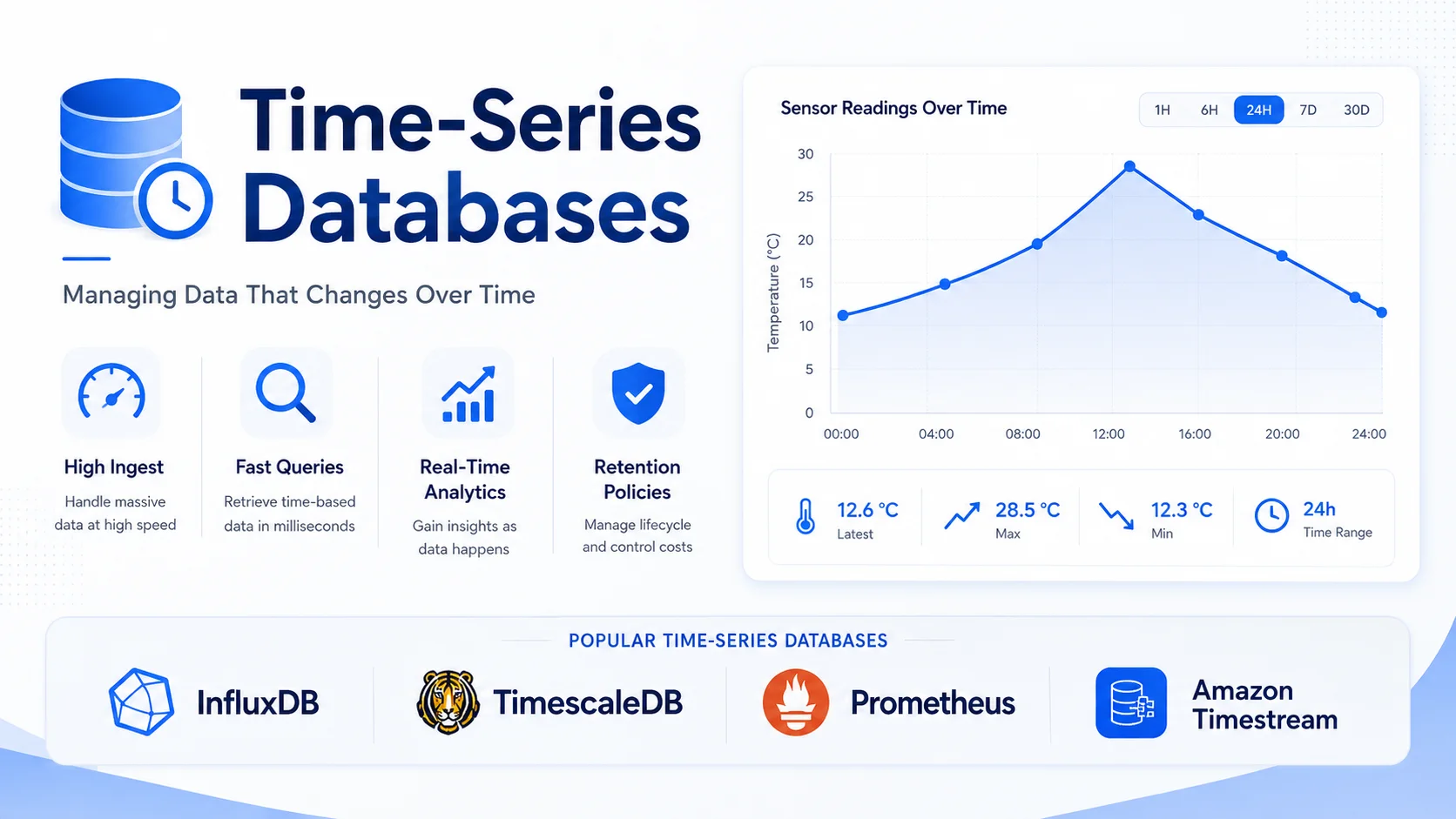
A time-series database (TSDB) is specialized for storing and querying data points indexed by time — sensor readings, server metrics, application logs, financial tick data, and IoT telemetry. Time-series data has unique characteristics that make traditional databases suboptimal:

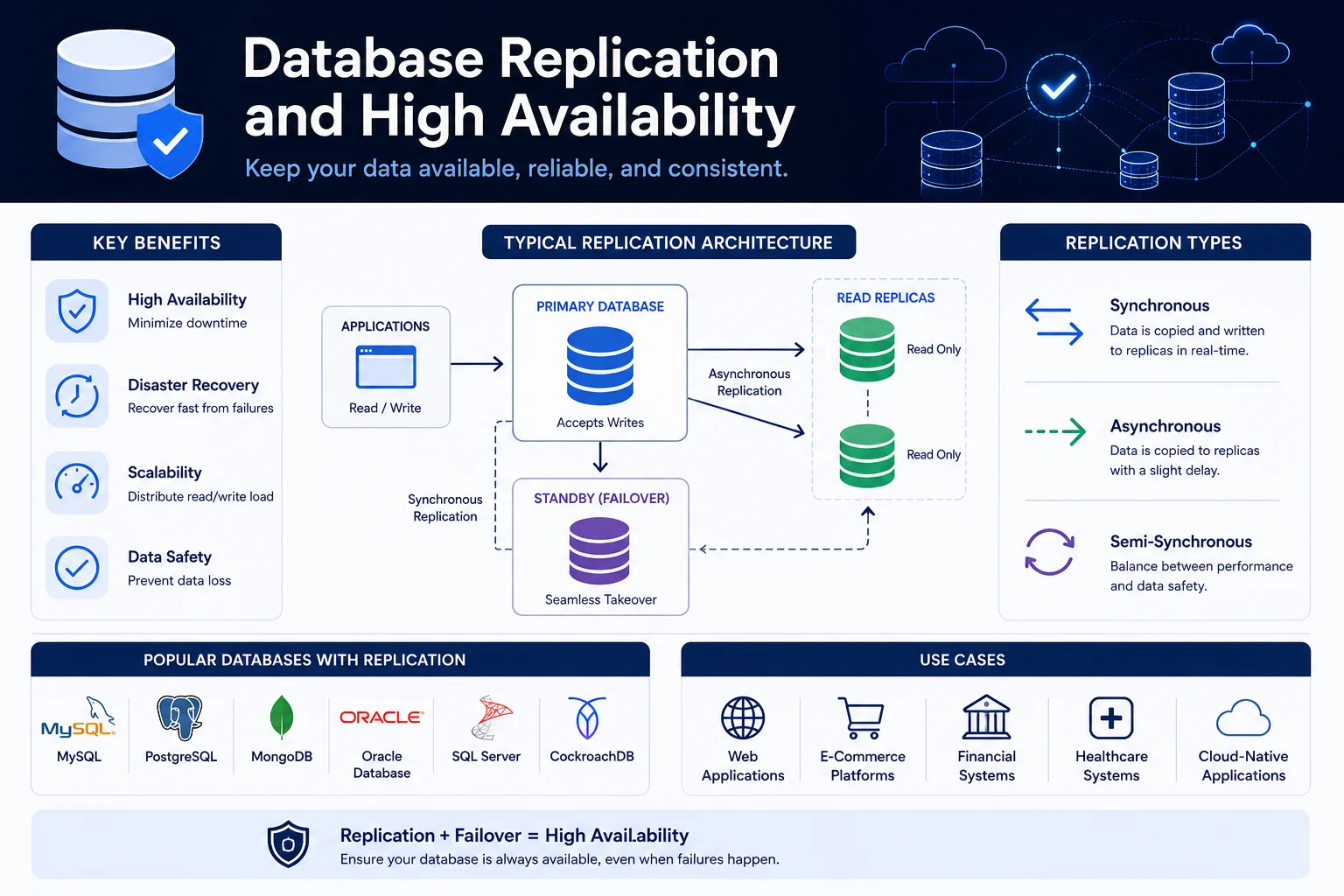
Database replication is the process of copying and maintaining database data across multiple servers. It is the foundation of high availability (HA), disaster recovery (DR), read scaling, and geographic distribution.

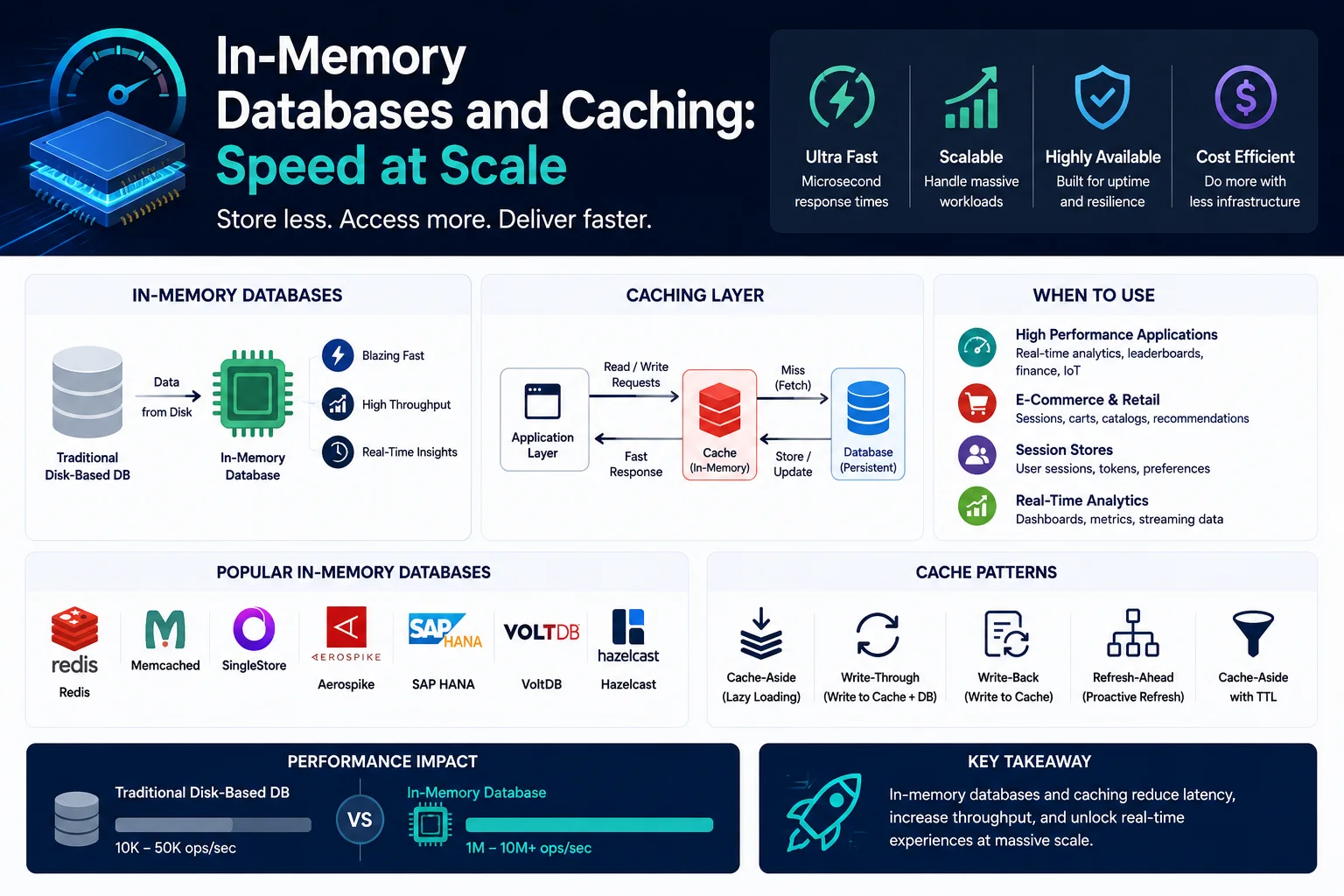
In-memory databases store data primarily in RAM rather than on disk. This eliminates disk I/O latency, providing microsecond response times — orders of magnitude faster than traditional disk-based databases.

For decades, the database world was split between two camps: **relational databases** (PostgreSQL, MySQL) with strong consistency but limited scalability, and **NoSQL databases** (MongoDB, Cassandra) with horizontal scalability but weaker consistency and limited query capabilities.

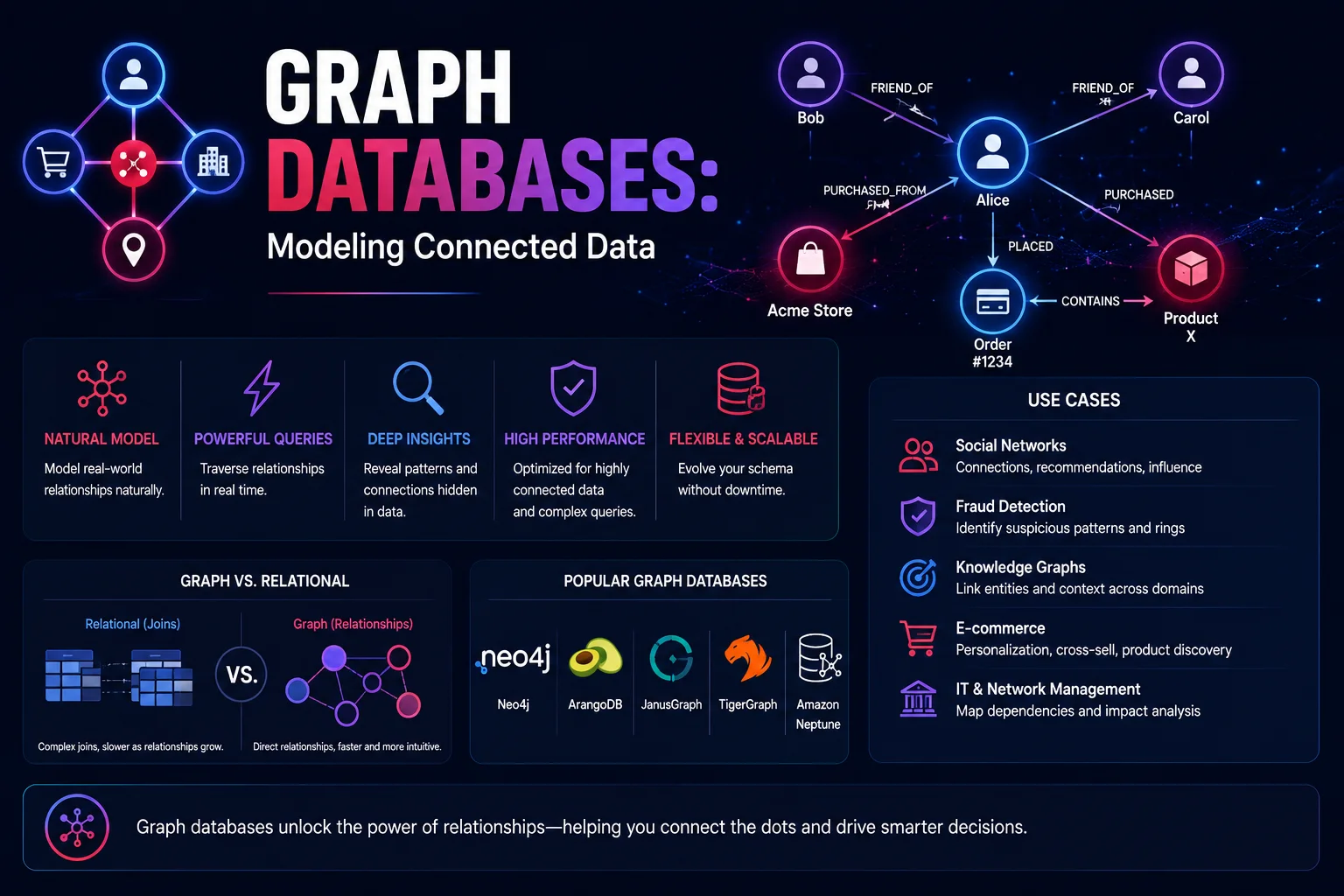
Graph databases are purpose-built for storing and querying highly connected data. While relational databases excel at tabular data with known relationships, graph databases excel when relationships are as important as the data itself — social networks, recommendation engines, fraud detection, knowledge graphs, and supply chains.