AI Agents and Autonomous Systems: Architecture, Patterns, and Applications
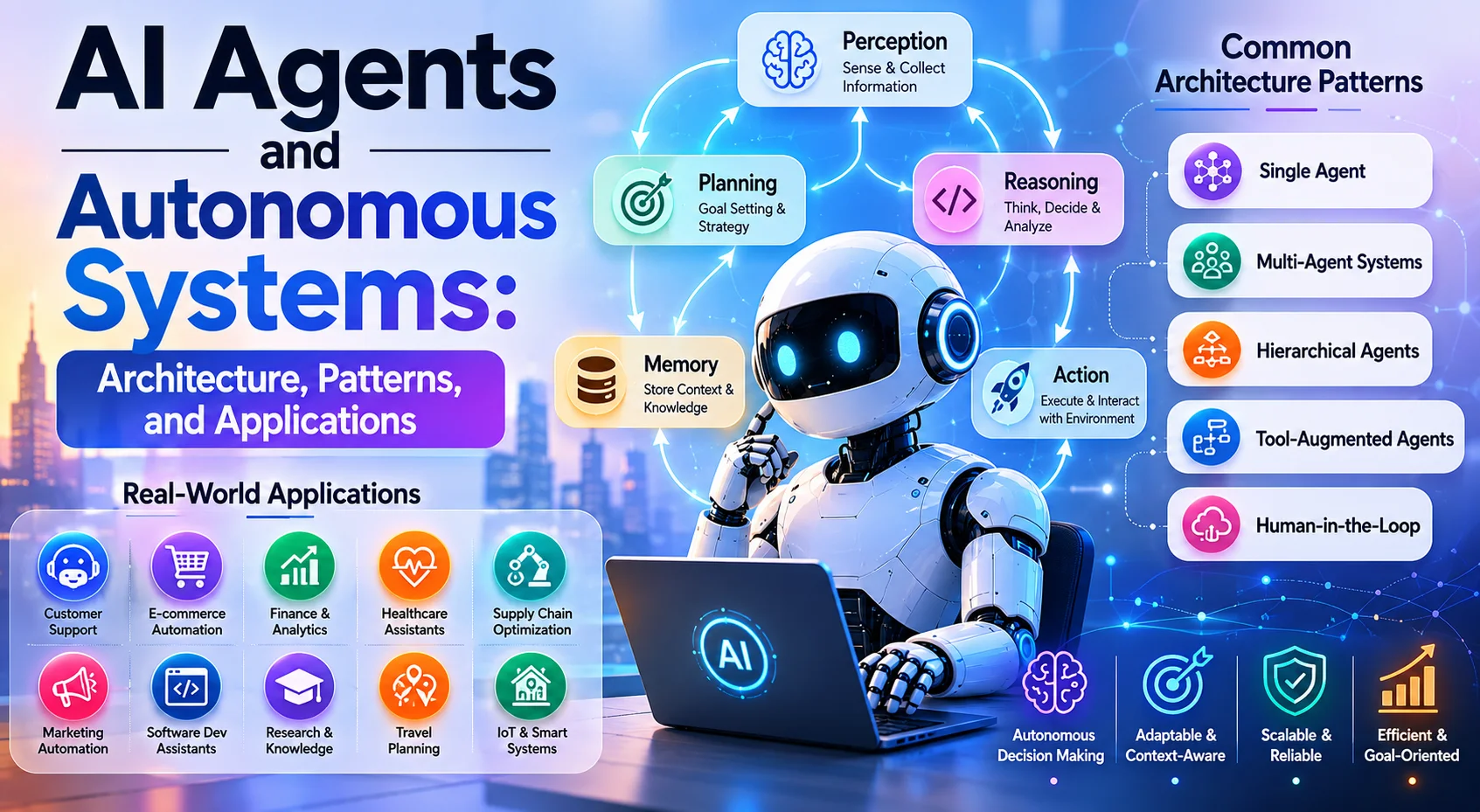
AI agents are autonomous software systems that perceive their environment, reason about goals, take actions, and learn from results. Unlike traditional LLM applications that respond to a single prompt, agents operate in loops — observing, thinking, acting, and observing again — until a goal is achieved.
Introduction
AI agents are autonomous software systems that perceive their environment, reason about goals, take actions, and learn from results. Unlike traditional LLM applications that respond to a single prompt, agents operate in loops — observing, thinking, acting, and observing again — until a goal is achieved.
In 2026, AI agents represent the frontier of applied AI. They automate complex multi-step workflows, interact with external tools and APIs, collaborate with other agents, and make decisions in dynamic environments.
What Makes an AI Agent?
Core Components
                   ┌──────────────────┐
                   │   Environment    │
                   │ (APIs, files,    │
                   │  databases, web) │
                   └────────┬─────────┘
                            │
Perception (observe)        │        Action (effect)
    ┌───────────────────────┼───────────────────────┐
    │                       │                       │
    ▼                       │                       ▼
┌─────────────────┐         │              ┌─────────────────┐
│   Sensors       │         │              │   Tools         │
│ (read input)    │         │              │ (call APIs,     │
│                 │         │              │  write files)   │
└────────┬────────┘         │              └────────▲────────┘
         │                 │                        │
         │          ┌──────▼──────────────────────┐ │
         └─────────►│       Reasoner (LLM)        ├─┘
                    │   (plan, decide, reflect)   │
                    └─────────────────────────────┘
                              │
                              ▼
                    ┌──────────────────┐
                    │   Memory         │
                    │ (history, state, │
                    │  learnings)      │
                    └──────────────────┘
| Component | Description | Example |
|---|---|---|
| Environment | The external world the agent interacts with | Web, file system, API, database |
| Sensors | How the agent perceives the environment | Read file, HTTP response, user input |
| Reasoner | The LLM that plans and decides | GPT-4, Claude, open-source model |
| Tools | Actions the agent can take | Search, calculator, code execution |
| Memory | Short-term (conversation) + long-term (vector DB) | Chat history, learned facts |
| Planning | Breaking goals into steps | ReAct, Plan-and-Solve, Tree-of-Thought |
Agent Architectures
1. ReAct (Reasoning + Acting)
The most popular agent pattern — interleaves reasoning traces with actions:
User: "Book a flight to Paris next Tuesday for under $500"

Thought: I need to search for flights to Paris next Tuesday.
Action: search_flights(destination="Paris", date="2026-05-26")
Observation: Found flights: $450 (direct), $380 (1 stop), $520 (direct)

Thought: The $450 direct flight is under budget. I need to check if
         the user has preferences for time.
Action: ask_user("Would you like the 7:00 AM direct for $450 or
                  the 11:00 AM direct for $520?")
Observation: User prefers morning.

Thought: Booking the 7:00 AM direct flight.
Action: book_flight(flight_id="AF1234", user_id="user_42")
Observation: Booking confirmed. Reference: BK-98765.

Thought: The task is complete. Let me summarize.
Response: I booked flight AF1234 to Paris on May 26 at 7:00 AM.
          Total: $450. Booking reference: BK-98765.
class ReActAgent:
    def __init__(self, llm, tools: list[Tool]):
        self.llm = llm
        self.tools = {t.name: t for t in tools}
        self.max_steps = 20

    def run(self, task: str) -> str:
        messages = [
            {"role": "system", "content": SYSTEM_PROMPT},
            {"role": "user", "content": task},
        ]

        for step in range(self.max_steps):
            # Reasoning step
            response = self.llm.invoke(messages)
            thought = response.content

            # Check if final answer
            if "FINAL ANSWER:" in thought:
                return thought.split("FINAL ANSWER:")[-1].strip()

            # Parse action
            action = self._parse_action(thought)
            if not action:
                continue

            # Execute action
            tool = self.tools.get(action['name'])
            if not tool:
                observation = f"Error: Unknown tool '{action['name']}'"
            else:
                try:
                    observation = tool.execute(**action['args'])
                except Exception as e:
                    observation = f"Error: {str(e)}"

            # Add to conversation
            messages.append({
                "role": "assistant",
                "content": thought
            })
            messages.append({
                "role": "user",
                "content": f"Observation: {observation}"
            })

        return "Max steps reached without completing task."
2. Plan-and-Solve (Decomposition)
User: "Create a monthly sales report with charts"

Plan:
1. Query database for last month's sales data
2. Clean and aggregate data by product category
3. Create bar chart of sales by category
4. Create line chart of daily sales trend
5. Generate PDF report with charts and summary

Step 1: query_database("SELECT ... WHERE month = '2026-04'")
✓ Done: 15,243 records returned

Step 2: aggregate_by_category(data)
✓ Done: 8 categories aggregated

...
3. Multi-Agent Systems
Specialized agents collaborate on complex tasks:
                    ┌─────────────────────────┐
                    │   Orchestrator Agent     │
                    │ (decomposes tasks,       │
                    │  coordinates agents)     │
                    └────┬──────┬──────┬───────┘
                         │      │      │
              ┌──────────┤      │      ├──────────┐
              │          │      │      │          │
         ┌────▼────┐ ┌──▼──┐ ┌─▼───┐ ┌▼────────┐
         │Research │ │Code │ │Test │ │Document │
         │ Agent   │ │Agent│ │Agent│ │ Agent   │
         │(search, │ │(code│ │(test│ │(docs,   │
         │ analyze)│ │ gen)│ │ gen)│ │ reports)│
         └─────────┘ └─────┘ └─────┘ └─────────┘
Example: Software Development with Multiple Agents:
# Agent roles
agents = {
    'product_manager': Agent(
        role="Defines requirements and acceptance criteria",
        tools=[search_knowledge_base, ask_user]
    ),
    'architect': Agent(
        role="Designs system architecture and data flow",
        tools=[draw_diagram, search_documentation]
    ),
    'developer': Agent(
        role="Writes and reviews code",
        tools=[write_file, read_file, execute_code]
    ),
    'qa_engineer': Agent(
        role="Writes tests and validates functionality",
        tools=[run_tests, check_coverage, report_bugs]
    ),
}

# Orchestrator coordinates the workflow
orchestrator = Orchestrator(agents)
result = orchestrator.execute(
    "Build a REST API for user authentication"
)
Tools and Function Calling
Defining Tools
from pydantic import BaseModel, Field

class SearchTool(Tool):
    name = "web_search"
    description = "Search the web for current information"

    class Parameters(BaseModel):
        query: str = Field(description="The search query")

    def execute(self, query: str) -> str:
        response = requests.get(
            "https://api.search.example.com",
            params={"q": query}
        )
        return response.text

class CalculatorTool(Tool):
    name = "calculator"
    description = "Perform mathematical calculations"

    class Parameters(BaseModel):
        expression: str = Field(
            description="Mathematical expression to evaluate"
        )

    def execute(self, expression: str) -> str:
        try:
            # Safe evaluation
            result = self._safe_eval(expression)
            return str(result)
        except Exception as e:
            return f"Error: {e}"

class DatabaseQueryTool(Tool):
    name = "query_database"
    description = "Query the sales database"

    class Parameters(BaseModel):
        sql: str = Field(description="SQL query to execute")

    def execute(self, sql: str) -> str:
        # Validate SQL (read-only queries only)
        if not sql.strip().upper().startswith("SELECT"):
            return "Error: Only SELECT queries are allowed"
        result = db.execute(sql)
        return json.dumps(result, default=str)
Tool Registration
class Agent:
    def __init__(self, llm, tools: list[Tool]):
        self.llm = llm
        self.tool_registry = {
            t.name: t for t in tools
        }

        # Create function descriptions for LLM
        self.functions = [
            {
                "type": "function",
                "function": {
                    "name": t.name,
                    "description": t.description,
                    "parameters": t.Parameters.model_json_schema()
                }
            }
            for t in tools
        ]

    def think_and_act(self, prompt: str) -> str:
        response = self.llm.invoke(
            messages=[{"role": "user", "content": prompt}],
            tools=self.functions
        )

        # If LLM wants to call a tool
        if response.tool_calls:
            for call in response.tool_calls:
                tool = self.tool_registry[call.function.name]
                args = json.loads(call.function.arguments)
                result = tool.execute(**args)
                # Feed result back to LLM...
Memory Systems
Short-Term Memory (Conversation Context)
class ConversationMemory:
    def __init__(self, max_tokens: int = 4000):
        self.messages = []
        self.max_tokens = max_tokens

    def add(self, role: str, content: str):
        self.messages.append({"role": role, "content": content})
        self._trim()

    def _trim(self):
        total = sum(len(m['content']) for m in self.messages)
        while total > self.max_tokens and len(self.messages) > 2:
            self.messages.pop(1)  # Keep system prompt
            total = sum(len(m['content']) for m in self.messages)
Long-Term Memory (Vector Store)
class LongTermMemory:
    def __init__(self, vector_store):
        self.store = vector_store

    def remember(self, fact: str, metadata: dict = None):
        """Store important facts for future reference"""
        embedding = embed_text(fact)
        self.store.insert(embedding, payload={
            'fact': fact,
            **metadata,
            'timestamp': datetime.now().isoformat()
        })

    def recall(self, query: str, k: int = 5) -> list[str]:
        """Retrieve relevant past facts"""
        query_vector = embed_text(query)
        results = self.store.search(query_vector, k=k)
        return [r.payload['fact'] for r in results]

    def consolidate(self):
        """Summarize and compress old memories"""
        old_memories = self.store.get_older_than(days=30)
        summary = summarize_texts([m.payload['fact'] for m in old_memories])
        self.remember(f"Summary of past activities: {summary}",
                       metadata={'type': 'summary'})
        self.store.delete(old_memories)
Agent Planning Strategies
Tree-of-Thoughts
Explore multiple reasoning paths simultaneously:
Question: "What is the best cloud provider for our startup?"

Branch 1: Cost comparison
  ├─ AWS: $X/month
  └─ GCP: $Y/month (cheaper, but fewer services)

Branch 2: Required services
  ├─ Need managed Kubernetes → all support
  └─ Need specific AI/ML → GCP has TPUs

Branch 3: Team expertise
  ├─ Team knows AWS → faster ramp-up
  └─ learning GCP → 2-3 month delay

Evaluation:
  Path AWS: high team skill, moderate cost → score 8/10
  Path GCP: lower cost, TPUs, but learning curve → score 7/10
Self-Reflection and Improvement
class ReflectiveAgent(Agent):
    def __init__(self, *args, **kwargs):
        super().__init__(*args, **kwargs)
        self.mistakes = []

    def reflect_on_failure(self, task: str, action: str, error: str):
        """Learn from mistakes"""
        reflection = self.llm.invoke(f"""
        Task: {task}
        Action taken: {action}
        Error: {error}

        Why did this fail? What should I do differently next time?
        """)
        self.mistakes.append(reflection.content)

    def plan(self, task: str) -> str:
        # Consider past mistakes when planning
        if self.mistakes:
            lessons = "\n".join([f"- {m}" for m in self.mistakes[-5:]])
            return self.llm.invoke(f"""
            Task: {task}
            Lessons from past mistakes:
            {lessons}
            Plan your approach carefully.
            """)
        return super().plan(task)
Use Cases
1. Automated Customer Support
Customer: "My order hasn't arrived and it's been 2 weeks"

Agent tasks:
1. Query order database for status
2. Check tracking API for shipment location
3. If delayed: contact shipping carrier
4. If lost: initiate refund process
5. If delivered: verify with customer

Tools needed: order_lookup, tracking_api, email_send, refund_system
2. Code Generation and Debugging
Developer: "Fix the login bug — users get 401 errors after password reset"

Agent workflow:
1. Search codebase for password reset implementation
2. Identify token validation logic
3. Write a unit test reproducing the bug
4. Fix the issue
5. Run existing tests to verify no regression
6. Create PR with description
3. Research Assistant
class ResearchAgent:
    async def research(self, topic: str) -> Report:
        # Parallel exploration
        subtopics = self.decompose(topic)
        tasks = [self.explore_subtopic(st) for st in subtopics]
        findings = await asyncio.gather(*tasks)

        # Synthesize
        report = self.synthesize(findings)
        return report

    async def explore_subtopic(self, subtopic: str) -> Finding:
        search_results = await web_search(subtopic)
        summaries = await asyncio.gather(*[
            summarize_page(url) for url in search_results[:5]
        ])
        return Finding(subtopic=subtopic, summaries=summaries)
Challenges and Risks
1. Hallucination in Actions
The agent may confidently take incorrect actions:
Thought: The user asked to delete expired records.
Action: DELETE FROM users  -- (Oops, no WHERE clause!)
Mitigation:
- Always verify destructive actions.
- Require confirmation for irreversible operations.
- Use "dry run" mode for testing.
2. Loop Detection
Agents may get stuck in infinite loops:
class LoopDetector:
    def __init__(self, max_repeated_actions: int = 3):
        self.action_history = []
        self.max_repeated = max_repeated_actions

    def check(self, action: str, observation: str) -> bool:
        self.action_history.append({
            'action': action,
            'observation': observation
        })

        # Check for repeated patterns
        recent = self.action_history[-5:]
        if len(recent) >= 3:
            patterns = [a['action'] for a in recent]
            if len(set(patterns)) <= 2:
                print("Loop detected!")
                return True
        return False
3. Cost Management
Each agent step costs money (LLM calls + API calls):
agent_cost_estimation:
  per_step:
    llm_call:  "$0.01"    # GPT-4o
    tool_call: "$0.001"   # Average API call
    search:    "$0.00"    # Web search

  typical_session:
    steps: 10-30
    total: "$0.10 - $0.50"

  complex_research:
    steps: 50-200
    total: "$0.50 - $5.00"
Agent Frameworks
| Framework | Language | Features |
|---|---|---|
| LangChain | Python | Most popular, broad tool ecosystem |
| AutoGen | Python | Multi-agent conversations, Microsoft |
| CrewAI | Python | Role-based agent teams |
| Semantic Kernel | C#/Python | Microsoft AI orchestration |
| Vercel AI SDK | TypeScript | RSC, streaming, tools for web apps |
| LlamaIndex | Python | RAG + agent, data-centric |
| OpenAI Assistants API | API | Managed, code interpreter, file search |
Conclusion
AI agents represent the next evolution of LLM applications — from single-turn Q&A to autonomous, multi-step task completion.
| Level | Type | Example |
|---|---|---|
| Level 1 | Simple chatbot | Q&A with RAG |
| Level 2 | Tool-using agent | Customer support with ticket creation |
| Level 3 | Multi-step with planning | Research assistant, code generation |
| Level 4 | Multi-agent systems | Software development team of agents |
| Level 5 | Autonomous learning | Self-improving, adapting over time |
Key takeaways:
- Start with simple ReAct — Most problems do not need complex architectures.
- Design tools carefully — Tool quality determines agent quality.
- Implement guardrails — Loop detection, cost limits, confirmation gates.
- Monitor and log everything — Agent behavior is harder to debug than traditional code.
- Human-in-the-loop — For critical decisions, have the agent ask for confirmation.
The most effective agent systems in 2026 balance autonomy with safety — giving the agent room to act while maintaining human oversight for consequential decisions.
Featured Articles
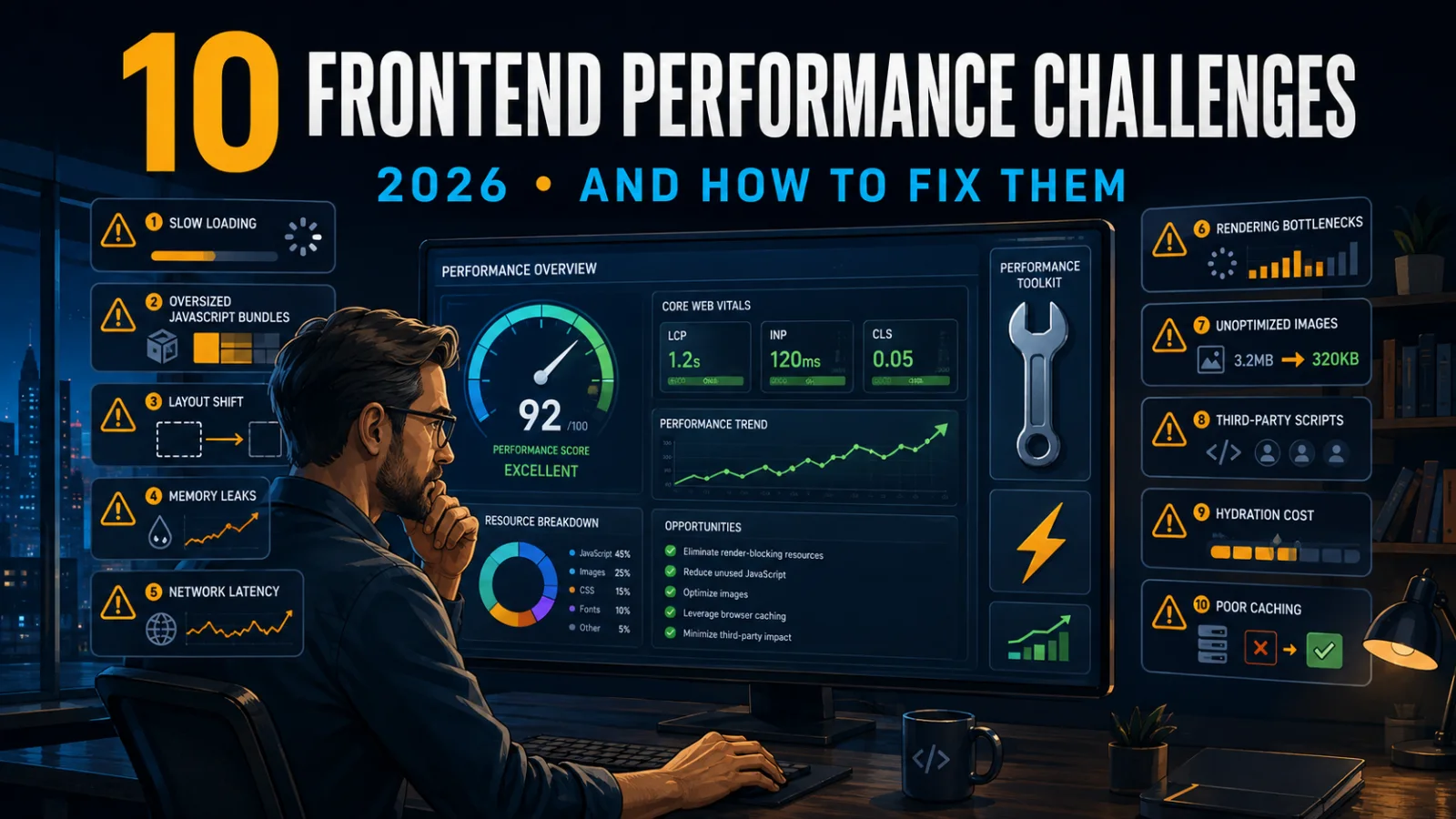
The 10 Largest Frontend Performance Challenges in 2026 (And How to Fix Them)
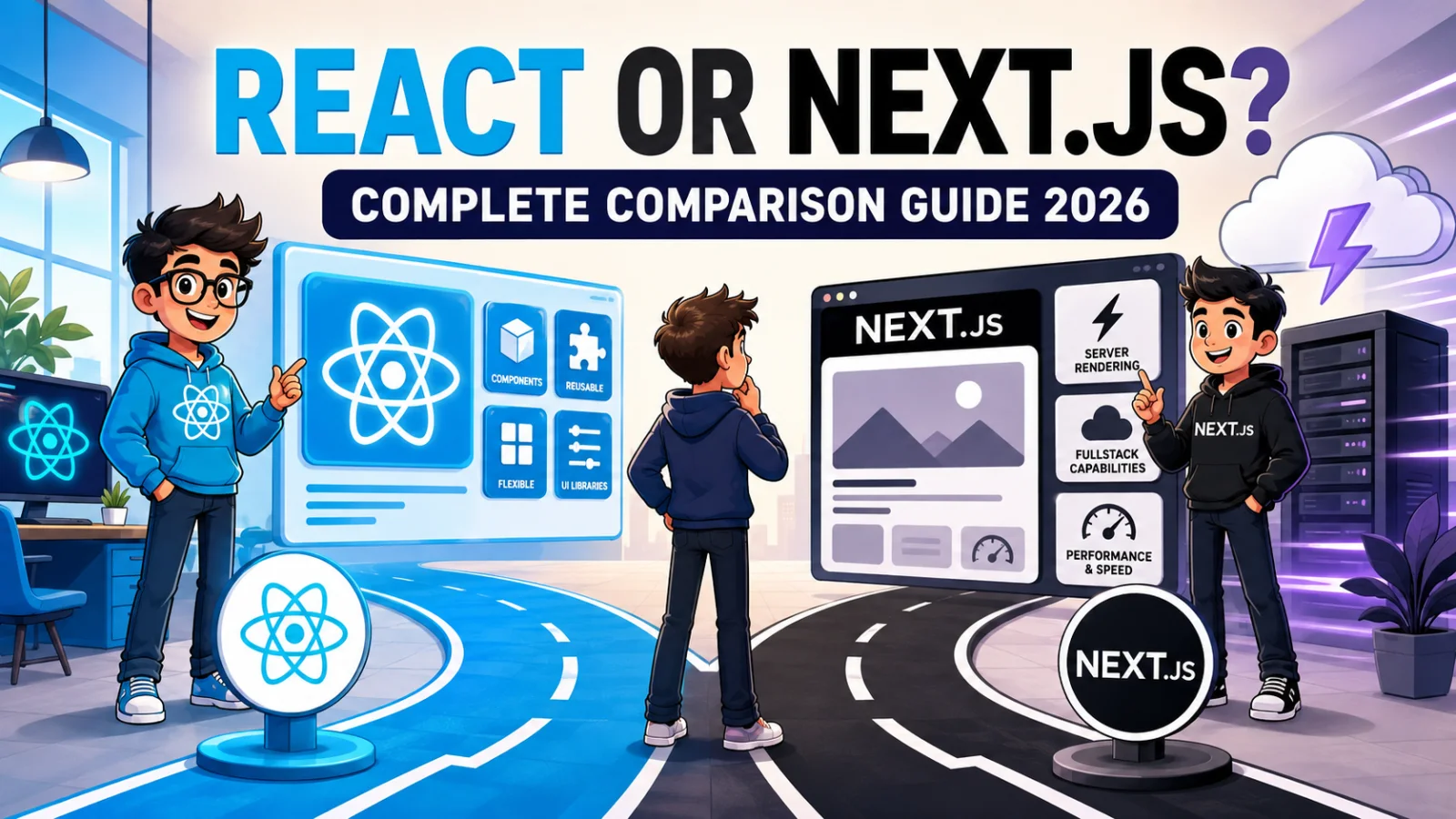
Should I Use React or Next.js? Complete Comparison Guide 2026

Build an Offline-First SaaS with Laravel & React: Complete PWA Tutorial 2026
Comments
0 commentsNo approved comments are visible yet. New community replies may wait for moderation.