MLOps: Makine Öğrenimi İşlemleri
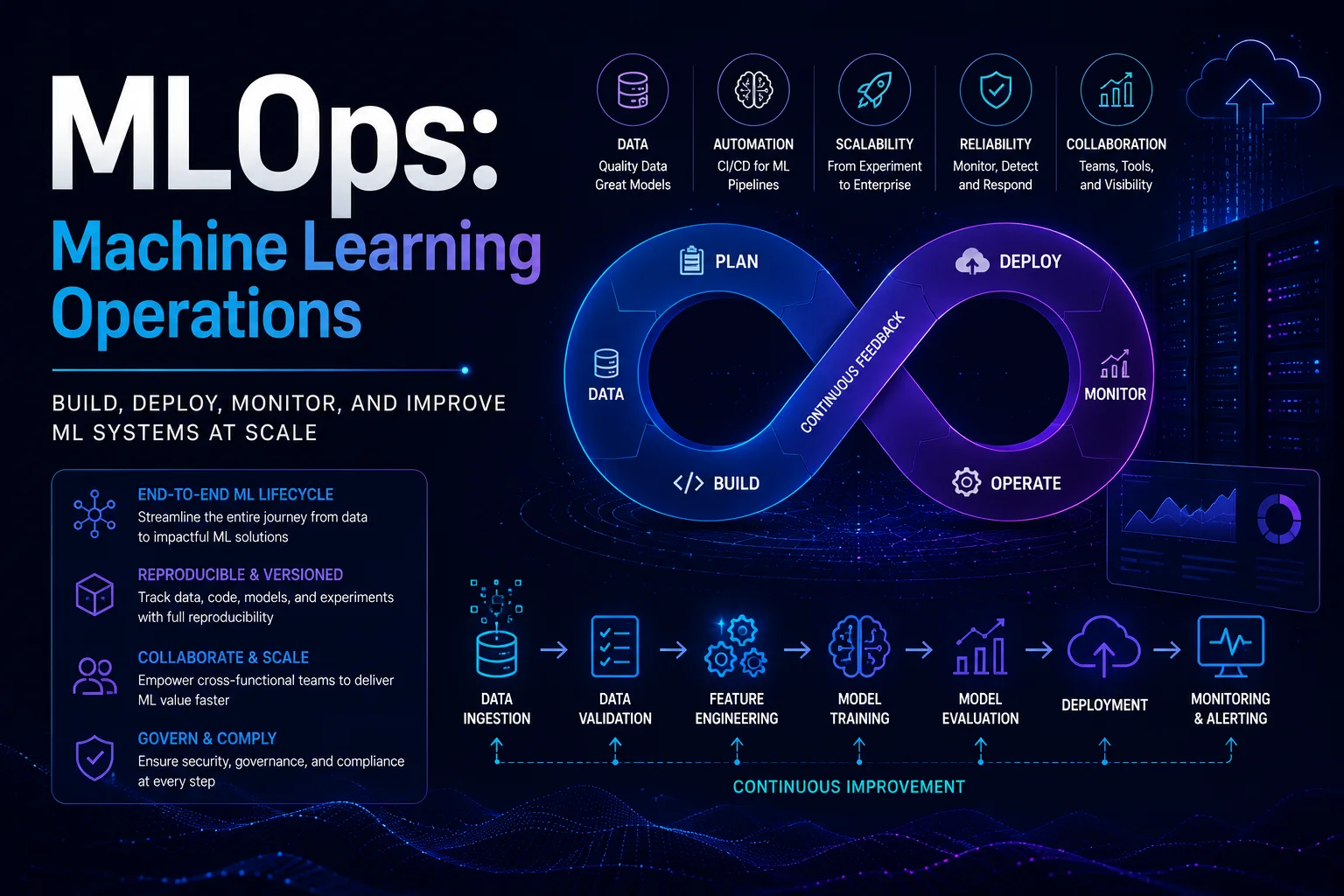
MLOps (Makine Öğrenimi Operasyonları), ML modellerini üretimde güvenilir ve verimli bir şekilde dağıtmak ve sürdürmek için makine öğrenimini, DevOps'u ve veri mühendisliğini birleştiren bir dizi uygulamadır. DevOps'un yazılım dağıtımını dönüştürmesi gibi, MLOps da ML'yi bir araştırma faaliyetinden güvenilir bir üretim disiplinine dönüştürüyor.
Giriş
MLOps (Makine Öğrenimi Operasyonları), ML modellerini üretimde güvenilir ve verimli bir şekilde dağıtmak ve sürdürmek için makine öğrenimini, DevOps'u ve veri mühendisliğini birleştiren bir dizi uygulamadır. DevOps'un yazılım dağıtımını dönüştürmesi gibi, MLOps da ML'yi bir araştırma faaliyetinden güvenilir bir üretim disiplinine dönüştürüyor.
MLOps'un ele aldığı temel zorluk: ML sistemleri, geleneksel yazılımların sahip olmadığı benzersiz hata modlarına sahiptir. Modeller zamanla bozulur (veri kayması, kavram kayması). Eğitim hatları belirleyici değildir. Modeller sessizce başarısız olabilir; makul görünen ancak giderek yanlışlaşan tahminler ortaya çıkarabilirler.
MLOps Neden Önemlidir?
Yaygın ML Üretim Hataları
| Sorun | Etki | Kök Neden |
|---|---|---|
| Veri kayması | Model doğruluğu %95'ten %70'e düşüyor | Temel veri dağıtımı değişti |
| Konsept kayması | Model yanlış tahminler yapıyor | Özellikler ve etiketler arasındaki ilişki değişti |
| Eğitim-sunum çarpıklığı | Model eğitimde çalışır, üretimde başarısız olur | Eğitim verileri != üretim verileri |
| Tekrarlanabilirlik hatası | Model sonuçları yeniden oluşturulamıyor | Eksik kod, veri veya ortam sürümü oluşturma |
| Sessiz hatalar | Model tahminleri döndürüyor ancak bunların kalitesi düşük | İzleme yok, uyarı yok |
| Altyapı kayması | Kitaplık güncellemelerinden sonra ardışık düzen kesintileri | Bağımlılık sürümü uyuşmazlığı |
MLOps Yaşam Döngüsü
                 ┌─────────────┐
                 │ Data        │
                 │ Management  │
                 └──────┬──────┘
                        │
                 ┌──────▼──────┐
                 │ Experiment  │
                 │ & Training  │
                 └──────┬──────┘
                        │
              ┌─────────▼─────────┐
              │ Model Evaluation  │
              │ & Validation      │
              └─────────┬─────────┘
                        │
              ┌─────────▼─────────┐
              │ Model Deployment  │
              │ & Serving         │
              └─────────┬─────────┘
                        │
              ┌─────────▼─────────┐
              │ Monitoring &      │
              │ Alerting          │
              └─────────┬─────────┘
                        │
              ┌─────────▼─────────┐
              │ Retrain & Repeat  │
              └───────────────────┘
1. Veri Yönetimi
Özellik Mağazası
Özellik deposu, ML özelliklerini depolamak, paylaşmak ve sunmak için kullanılan merkezi bir depodur:
# Feast feature definition
from datetime import timedelta
from feast import FeatureView, Entity, Field, FileSource
from feast.types import Float32, Int32, String

customer_entity = Entity(
    name='customer_id',
    value_type=Int32,
    description='Customer identifier for ML features'
)

# Batch features
customer_stats = FeatureView(
    name='customer_stats',
    entities=['customer_id'],
    ttl=timedelta(days=30),
    schema=[
        Field(name='total_orders', dtype=Int32),
        Field(name='avg_order_value', dtype=Float32),
        Field(name='days_since_last_order', dtype=Int32),
        Field(name='customer_tenure_days', dtype=Int32),
        Field(name='top_category', dtype=String),
    ],
    source=FileSource(path='s3://features/customer_stats.parquet'),
    online=True,  # Available for real-time serving
)

# Real-time features (computed on the fly)
class RealTimeFeatures:
    """Features computed in real-time from streaming data"""

    @on_demand_feature_view(
        sources=[customer_stats],
        schema=[
            Field(name='session_views_5min', dtype=Int32),
            Field(name='cart_value', dtype=Float32),
            Field(name='abandoned_cart', dtype=Int32),
        ]
    )
    def realtime_behavioral_features(inputs: pd.DataFrame) -> pd.DataFrame:
        return pd.DataFrame({
            'session_views_5min': get_recent_pageviews(inputs['customer_id']),
            'cart_value': get_current_cart_value(inputs['customer_id']),
            'abandoned_cart': check_abandoned_cart(inputs['customer_id']),
        })
Veri Sürümü Oluşturma
# DVC (Data Version Control)
dvc init
dvc add data/training_set.parquet
dvc run -n prepare_data \
  -d src/prepare.py \
  -d data/raw_orders.csv \
  -o data/training_set.parquet \
  python src/prepare.py

git add data/training_set.parquet.dvc
git commit -m "Add training dataset v1"
Veri Doğrulama
import great_expectations as ge

# Define expectations for training data
expectation_suite = {
    "expectations": [
        {
            "expectation_type": "expect_column_values_to_not_be_null",
            "kwargs": {"column": "customer_id"}
        },
        {
            "expectation_type": "expect_column_values_to_be_between",
            "kwargs": {
                "column": "age",
                "min_value": 18,
                "max_value": 120
            }
        },
        {
            "expectation_type": "expect_column_distinct_values_to_be_in_set",
            "kwargs": {
                "column": "country",
                "value_set": ["US", "UK", "CA", "DE", "FR"]
            }
        },
        {
            "expectation_type": "expect_column_mean_to_be_between",
            "kwargs": {
                "column": "order_amount",
                "min_value": 10,
                "max_value": 5000
            }
        },
        {
            "expectation_type": "expect_column_proportion_of_unique_values_to_be_between",
            "kwargs": {
                "column": "customer_id",
                "min_value": 0.5,
                "max_value": 1.0
            }
        }
    ]
}

# Validate
df = ge.read_parquet('s3://data-lake/curated/training_data.parquet')
results = df.validate(expectation_suite)
assert results['success'], "Data validation failed!"
2. Deney Takibi
MLflow Örneği
import mlflow
from sklearn.ensemble import RandomForestClassifier
from sklearn.metrics import accuracy_score, precision_score, recall_score

# Set tracking URI
mlflow.set_tracking_uri('http://mlflow-server:5000')
mlflow.set_experiment('customer_churn_prediction')

with mlflow.start_run(run_name='rf_v2_balanced'):
    # Log parameters
    mlflow.log_param('model_type', 'RandomForest')
    mlflow.log_param('n_estimators', 200)
    mlflow.log_param('max_depth', 10)
    mlflow.log_param('class_weight', 'balanced')
    mlflow.log_param('features_used', ['age', 'tenure', 'total_orders', 'avg_order_value', 'support_tickets'])

    # Train model
    model = RandomForestClassifier(
        n_estimators=200,
        max_depth=10,
        class_weight='balanced',
        random_state=42
    )
    model.fit(X_train, y_train)

    # Evaluate
    y_pred = model.predict(X_test)
    metrics = {
        'accuracy': accuracy_score(y_test, y_pred),
        'precision': precision_score(y_test, y_pred),
        'recall': recall_score(y_test, y_pred),
        'f1': 2 * precision_score(y_test, y_pred) * recall_score(y_test, y_pred) /
              (precision_score(y_test, y_pred) + recall_score(y_test, y_pred))
    }

    # Log metrics
    for name, value in metrics.items():
        mlflow.log_metric(name, value)

    # Log model
    mlflow.sklearn.log_model(model, 'model')

    # Log artifacts
    mlflow.log_artifact('features_importance.png')
    mlflow.log_artifact('confusion_matrix.png')
    mlflow.log_artifact('data/training_set.parquet')

    # Register model
    mlflow.register_model('runs:/{}/model'.format(mlflow.active_run().info.run_id),
                          'churn_predictor')
Deney Karşılaştırması
# Compare all runs in experiment
from mlflow.tracking import MlflowClient

client = MlflowClient()
runs = client.search_runs(
    experiment_ids=['1'],
    order_by=['metrics.f1 DESC'],
    max_results=10
)

for run in runs:
    print(f"Run: {run.info.run_id}")
    print(f"  F1: {run.data.metrics.get('f1'):.4f}")
    print(f"  Recall: {run.data.metrics.get('recall'):.4f}")
    print(f"  Params: {run.data.params}")
3. Model Eğitim Hattı
Kubeflow ile Otomatik İşlem Hattı
from kfp import dsl
from kfp.dsl import Input, Output, Dataset, Model

@dsl.component
def load_data(input_data: Input[Dataset]):
    import pandas as pd
    df = pd.read_parquet('s3://data-lake/features/*.parquet')
    df.to_csv(input_data.path, index=False)

@dsl.component
def train_model(
    training_data: Input[Dataset],
    model_output: Output[Model],
    n_estimators: int = 100,
    max_depth: int = 10,
):
    import pandas as pd
    from sklearn.ensemble import RandomForestClassifier
    import pickle

    df = pd.read_csv(training_data.path)
    X = df.drop('churned', axis=1)
    y = df['churned']

    model = RandomForestClassifier(
        n_estimators=n_estimators,
        max_depth=max_depth,
        random_state=42
    )
    model.fit(X, y)

    with open(model_output.path, 'wb') as f:
        pickle.dump(model, f)

@dsl.component
def evaluate_model(
    model: Input[Model],
    test_data: Input[Dataset],
):
    import pandas as pd
    import pickle
    from sklearn.metrics import f1_score

    with open(model.path, 'rb') as f:
        model_obj = pickle.load(f)

    df = pd.read_csv(test_data.path)
    X = df.drop('churned', axis=1) if 'churned' in df.columns else df
    y = df['churned'] if 'churned' in df.columns else None

    if y is not None:
        y_pred = model_obj.predict(X)
        f1 = f1_score(y, y_pred)
        print(f"F1 Score: {f1:.4f}")
        if f1 < 0.7:
            raise ValueError(f"Model F1 {f1:.4f} below threshold 0.7")

@dsl.pipeline
def churn_pipeline():
    data_task = load_data()
    train_task = train_model(
        training_data=data_task.outputs['input_data'],
        n_estimators=200,
        max_depth=10,
    )
    evaluate_task = evaluate_model(
        model=train_task.outputs['model_output'],
        test_data=data_task.outputs['input_data'],
    )
4. Model Değerlendirme ve Doğrulama
Doğruluğun Ötesinde Değerlendirme
import numpy as np
from sklearn.metrics import (
    confusion_matrix, classification_report,
    roc_auc_score, precision_recall_curve
)

def evaluate_model(model, X_test, y_test, model_name='Model'):
    y_pred = model.predict(X_test)
    y_proba = model.predict_proba(X_test)[:, 1] if hasattr(model, 'predict_proba') else None

    results = {
        'model': model_name,
        'accuracy': np.mean(y_pred == y_test),
        'auc_roc': roc_auc_score(y_test, y_proba) if y_proba is not None else None,
        'confusion_matrix': confusion_matrix(y_test, y_pred).tolist(),
        'classification_report': classification_report(y_test, y_pred, output_dict=True),
    }

    # Business metrics
    results['cost_savings'] = calculate_business_impact(y_test, y_pred)

    # Fairness metrics
    for sensitive_attr in ['gender', 'age_group', 'region']:
        results[f'fairness_{sensitive_attr}'] = check_fairness(
            model, X_test, y_test, sensitive_attr
        )

    return results

def check_fairness(model, X, y, sensitive_attr):
    """Check demographic parity and equal opportunity"""
    groups = X[sensitive_attr].unique()
    group_metrics = {}
    for group in groups:
        mask = X[sensitive_attr] == group
        y_pred = model.predict(X[mask])
        group_metrics[group] = {
            'positive_rate': np.mean(y_pred),
            'true_positive_rate': np.mean(y_pred[y[mask] == 1]) if sum(y[mask] == 1) > 0 else None,
        }
    return group_metrics
5. Model Dağıtımı
Dağıtım Stratejileri
| Strateji | Açıklama | Risk | Kullanım Örneği |
|---|---|---|---|
| Gölge | Yeni model paralel olarak çalışıyor, çıktı günlüğe kaydediliyor ancak kullanılmıyor | Yok | Doğrulama, günlük karşılaştırması |
| Kanarya | Yeni modele yönlendirilen trafiğin küçük bir yüzdesi | Düşük | Kademeli kullanıma sunma |
| Mavi/Yeşil | İki özdeş ortam, anında değiştirin | Orta | Sıfır kesinti süreli dağıtımlar |
| A/B Testi | Trafiği bölün, iş ölçümlerini karşılaştırın | Orta | İş doğrulama |
KServe ile Model Sunumu
apiVersion: serving.kserve.io/v1beta1
kind: InferenceService
metadata:
  name: churn-predictor
spec:
  predictor:
    model:
      modelFormat:
        name: sklearn
      storageUri: s3://models/churn-predictor/001
    minReplicas: 2
    maxReplicas: 10
    resources:
      requests:
        cpu: "1"
        memory: "2Gi"
      limits:
        cpu: "2"
        memory: "4Gi"
    autoscaler:
      target: 10  # Requests per second per replica
# Client code to call the deployed model
import requests

def predict_churn(customer_data: dict) -> float:
    payload = {
        'instances': [customer_data]
    }
    response = requests.post(
        'https://churn-predictor.example.com/v1/models/churn-predictor:predict',
        json=payload,
        headers={'Authorization': f'Bearer {API_TOKEN}'}
    )
    result = response.json()
    return result['predictions'][0]['score']
Sunum için Model Optimizasyonu
# Convert model to ONNX for faster inference
import onnx
from skl2onnx import convert_sklearn
from skl2onnx.common.data_types import FloatTensorType

initial_type = [('float_input', FloatTensorType([None, X_train.shape[1]]))]
onnx_model = convert_sklearn(model, initial_types=initial_type)

with open('model.onnx', 'wb') as f:
    f.write(onnx_model.SerializeToString())

# ONNX Runtime is 2-5x faster than scikit-learn for inference
import onnxruntime as ort
session = ort.InferenceSession('model.onnx')
result = session.run(None, {'float_input': input_array.astype(np.float32)})
6. İzleme
Model İzleme Yığını
monitoring_stack:
  metrics: Prometheus + Grafana
  logging: ELK Stack / Grafana Loki
  drift_detection: Evidently AI / WhyLabs
  alerts: PagerDuty / Slack

key_metrics:
  - prediction_count
  - latency_p50, p95, p99
  - error_rate
  - data_drift_score
  - model_drift_score
  - feature_distribution_stats
  - prediction_distribution
Veri Kayması Tespiti
# Evidently AI drift detection
from evidently import ColumnMapping
from evidently.report import Report
from evidently.metric_preset import DataDriftPreset, TargetDriftPreset

def detect_drift(reference_data, current_data, columns):
    report = Report(metrics=[
        DataDriftPreset(),
        TargetDriftPreset(),
    ])

    column_mapping = ColumnMapping(
        numerical_features=[c for c in columns if c != 'target'],
        target='target',
    )

    report.run(
        reference_data=reference_data,
        current_data=current_data,
        column_mapping=column_mapping,
    )

    result = report.as_dict()
    drift_detected = result['metrics'][0]['result']['dataset_drift']

    if drift_detected:
        alert_team(f"Data drift detected! Score: {result['metrics'][0]['result']['drift_score']:.2f}")

    return result
Performans Düşüşünün Takibi
class ModelMonitor:
    def __init__(self, model_id: str, expected_metrics: dict):
        self.model_id = model_id
        self.expected_metrics = expected_metrics
        self.predictions_buffer = []

    async def log_prediction(self, features: dict, prediction: float, actual: float = None):
        record = {
            'model_id': self.model_id,
            'timestamp': datetime.now().isoformat(),
            'features': features,
            'prediction': prediction,
            'actual': actual,
            'confidence': prediction if prediction > 0.5 else 1 - prediction,
        }
        self.predictions_buffer.append(record)

        # Periodically evaluate
        if len(self.predictions_buffer) >= 1000:
            await self.evaluate_performance()

    async def evaluate_performance(self):
        valid = [r for r in self.predictions_buffer if r['actual'] is not None]
        if len(valid) < 100:
            return

        accuracy = sum(1 for r in valid if (r['prediction'] > 0.5) == (r['actual'] == 1)) / len(valid)

        if accuracy < self.expected_metrics['accuracy'] - 0.05:
            await alert_team(
                f"Model {self.model_id} accuracy dropped from "
                f"{self.expected_metrics['accuracy']:.2f} to {accuracy:.2f}"
            )

        self.predictions_buffer = []
7. CI/CD'li ML Ardışık Düzeni
# .github/workflows/ml-pipeline.yml
name: ML Training Pipeline

on:
  schedule:
    - cron: '0 6 * * 1'  # Weekly: Monday 6 AM
  push:
    branches: [main]
    paths:
      - 'models/**'
      - 'features/**'
      - 'config/**'

jobs:
  train:
    runs-on: ubuntu-latest
    steps:
      - uses: actions/checkout@v4

      - name: Validate data
        run: python -m src.validate_data

      - name: Train model
        run: python -m src.train_model
        env:
          MLFLOW_TRACKING_URI: ${{ secrets.MLFLOW_URI }}

      - name: Evaluate model
        run: python -m src.evaluate

      - name: Deploy if champion
        run: |
          python -m src.promote_to_champion
          kubectl apply -f deployment.yaml
MLOps Olgunluk Seviyeleri
| Seviye | Veri | Deneyler | Boru hatları | Dağıtım | İzleme |
|---|---|---|---|---|---|
| 0 — Manuel | Yerel dosyalar, sürüm oluşturma yok | İzleme yok | Manuel komut dosyaları | Modeli manuel olarak kopyala | Yok |
| 1 — Otomatik | Veri sürümü oluşturma (DVC) | ML akışı izleme | CI/CD eğitimi | Konteynerli servis | Temel metrikler |
| 2 — Otomatik + İzleme | Özellik mağazası | Hiperparametre ayarı | Düzenlenmiş boru hatları | A/B testi | Sürüklenme tespiti |
| 3 — Tam MLOps | Otomatik veri doğrulama | Otomatik ML | Kendi kendini onaran boru hatları | Otomatik dağıtım | Otomatik yeniden eğitim |
Sonuç
MLOps, makine öğrenimini sanattan mühendisliğe dönüştürüyor. Temel çıkarımlar:
- Her şeyi sürümlendirin — Verilerin, kodun, modellerin ve ortamların çoğaltılabilirlik açısından sürümlendirilmesi gerekir.
- Ardışık düzenleri otomatikleştirin — Eğitim, değerlendirme ve dağıtım CI/CD odaklı olmalıdır.
- Sürekli izleyin — Model bozulması sessizdir. Veri kaymasını, performansı ve iş ölçümlerini izleyin.
- Basit başlayın, tekrarlayın — Düzey 0 → Düzey 1 → Düzey 2. Düzey 3'e bir gecede ulaşmaya çalışmayın.
- ML yalnızca modellerle ilgili değildir — Dağıtılan model, karmaşık bir sistemin küçük bir parçasıdır.
MLOps'un amacı tüm arızaları ortadan kaldırmak değil; onları hızlı bir şekilde tespit edip düzeltmektir. İhtiyaç duymadan önce izleme, uyarı ve otomatik geri alma özelliklerine yatırım yapın.
Öne Çıkan Makaleler

2026’da Oluşturmaya Değer 50 Claude Skill
Claude Skills, tekrarlanan promptları yeniden kullanılabilir workflow’lara dönüştürebilir. İşte yazma, kodlama, araştırma, iş, üretkenlik, tasarım, analiz ve destek için 50 pratik Claude Skill.
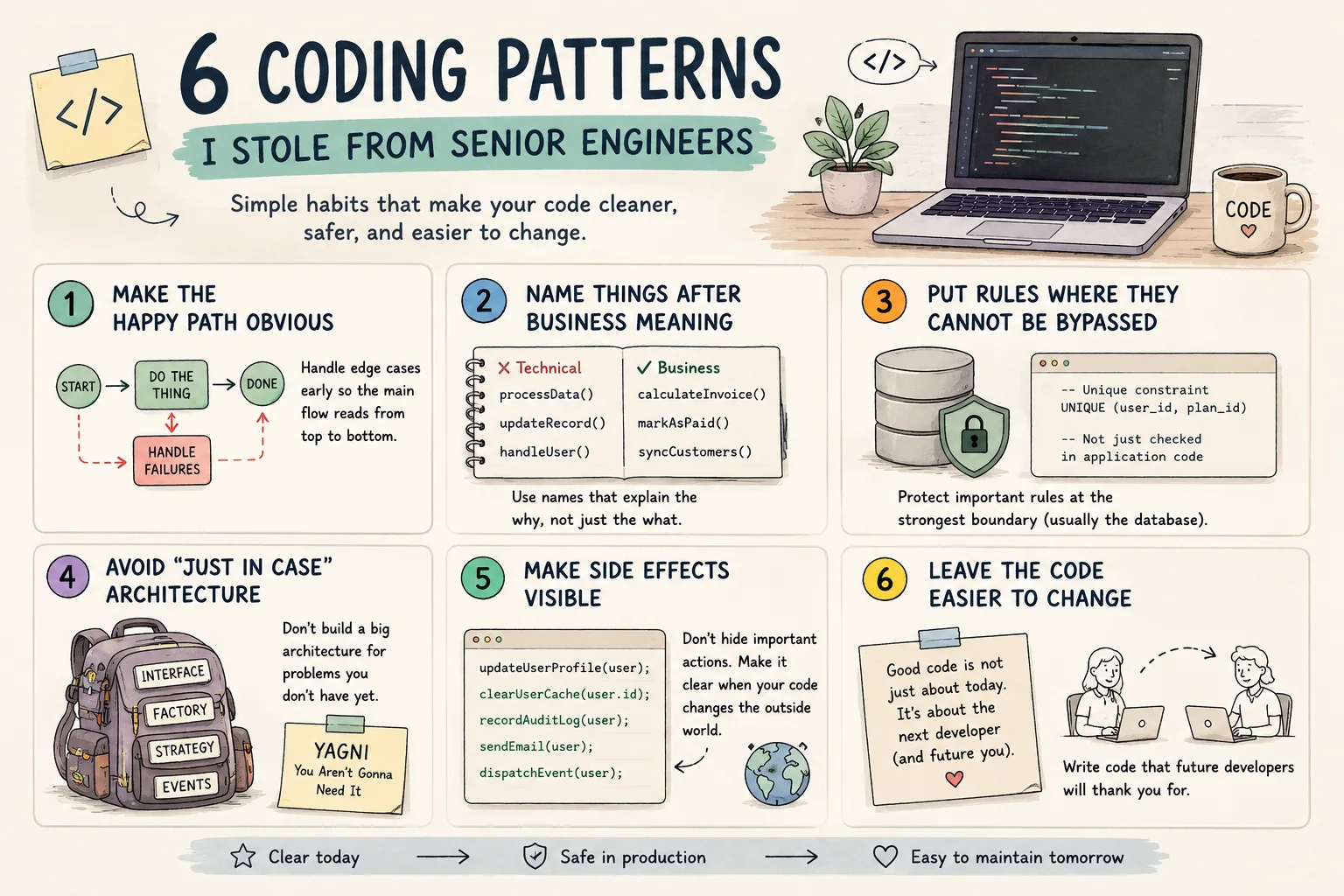
Senior Engineer’lardan Öğrendiğim 6 Kodlama Pattern’i

Özel Bir Yapay Zeka Not Asistanı Kurun
Markdown notlarını özel taslakları açığa çıkarmadan aranabilir bir asistana dönüştürün.
Yorumlar
0 yorumHenüz onaylı yorum yok. Yeni yanıtlar moderasyon bekleyebilir.