Yapay Zeka Aracıları ve Otonom Sistemler: Mimari, Desenler ve Uygulamalar
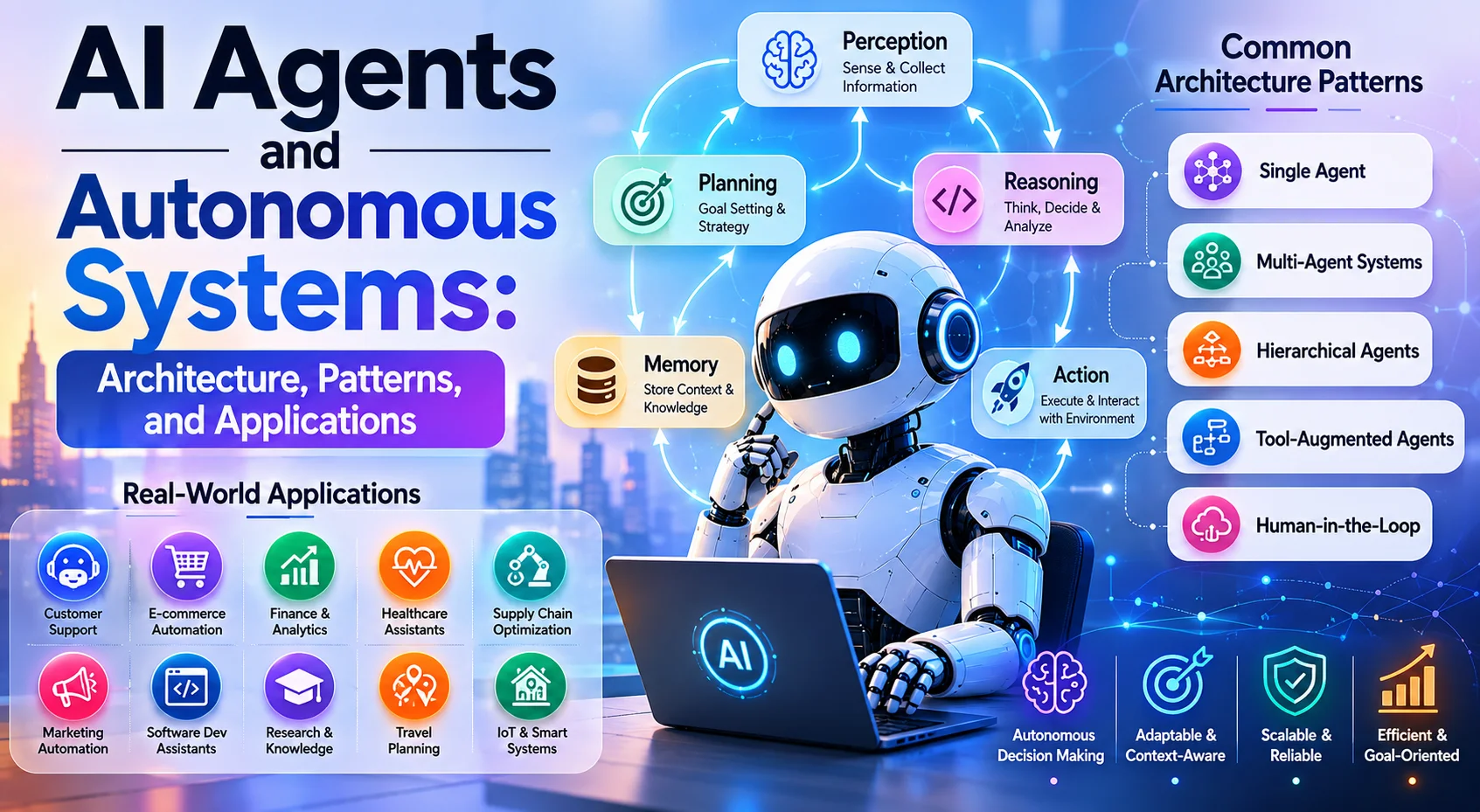
Yapay zeka aracıları, çevrelerini algılayan, hedefler hakkında mantık yürüten, harekete geçen ve sonuçlardan öğrenen özerk yazılım sistemleridir. Tek bir uyarıya yanıt veren geleneksel LLM uygulamalarından farklı olarak, aracılar bir hedefe ulaşılıncaya kadar gözlem, düşünme, hareket etme ve tekrar gözlemleme gibi döngüler halinde çalışırlar.
Giriş
Yapay zeka aracıları, çevrelerini algılayan, hedefler hakkında mantık yürüten, harekete geçen ve sonuçlardan öğrenen özerk yazılım sistemleridir. Tek bir uyarıya yanıt veren geleneksel LLM uygulamalarından farklı olarak, aracılar bir hedefe ulaşılıncaya kadar gözlem, düşünme, hareket etme ve tekrar gözlemleme gibi döngüler halinde çalışırlar.
2026'da yapay zeka ajanları, uygulamalı yapay zekanın sınırlarını temsil edecek. Karmaşık çok adımlı iş akışlarını otomatikleştirir, harici araçlarla ve API'lerle etkileşime girer, diğer aracılarla işbirliği yapar ve dinamik ortamlarda kararlar alırlar.
Bir Yapay Zeka Aracısı Ne Olur?
Temel Bileşenler
                   ┌──────────────────┐
                   │   Environment    │
                   │ (APIs, files,    │
                   │  databases, web) │
                   └────────┬─────────┘
                            │
Perception (observe)        │        Action (effect)
    ┌───────────────────────┼───────────────────────┐
    │                       │                       │
    ▼                       │                       ▼
┌─────────────────┐         │              ┌─────────────────┐
│   Sensors       │         │              │   Tools         │
│ (read input)    │         │              │ (call APIs,     │
│                 │         │              │  write files)   │
└────────┬────────┘         │              └────────▲────────┘
         │                 │                        │
         │          ┌──────▼──────────────────────┐ │
         └─────────►│       Reasoner (LLM)        ├─┘
                    │   (plan, decide, reflect)   │
                    └─────────────────────────────┘
                              │
                              ▼
                    ┌──────────────────┐
                    │   Memory         │
                    │ (history, state, │
                    │  learnings)      │
                    └──────────────────┘
| Bileşen | Açıklama | Örnek |
|---|---|---|
| Çevre | Aracının etkileşimde bulunduğu dış dünya | Web, dosya sistemi, API, veritabanı |
| Sensörler | Temsilcinin çevreyi nasıl algıladığı | Dosyayı oku, HTTP yanıtı, kullanıcı girişi |
| Akıl yürütücü | Planlayan ve karar veren LLM | GPT-4, Claude, açık kaynak modeli |
| Araçlar | Temsilcinin gerçekleştirebileceği eylemler | Arama, hesap makinesi, kod yürütme |
| Bellek | Kısa vadeli (konuşma) + uzun vadeli (vektör DB) | Sohbet geçmişi, öğrenilen gerçekler |
| Planlama | Hedefleri adımlara ayırma | ReAct, Planla ve Çöz, Düşünce Ağacı |
Aracı Mimarileri
1. ReAct (Akıl Yürütme + Oyunculuk)
En popüler aracı modeli — muhakeme izlerini eylemlerle birleştirir:
User: "Book a flight to Paris next Tuesday for under $500"

Thought: I need to search for flights to Paris next Tuesday.
Action: search_flights(destination="Paris", date="2026-05-26")
Observation: Found flights: $450 (direct), $380 (1 stop), $520 (direct)

Thought: The $450 direct flight is under budget. I need to check if
         the user has preferences for time.
Action: ask_user("Would you like the 7:00 AM direct for $450 or
                  the 11:00 AM direct for $520?")
Observation: User prefers morning.

Thought: Booking the 7:00 AM direct flight.
Action: book_flight(flight_id="AF1234", user_id="user_42")
Observation: Booking confirmed. Reference: BK-98765.

Thought: The task is complete. Let me summarize.
Response: I booked flight AF1234 to Paris on May 26 at 7:00 AM.
          Total: $450. Booking reference: BK-98765.
class ReActAgent:
    def __init__(self, llm, tools: list[Tool]):
        self.llm = llm
        self.tools = {t.name: t for t in tools}
        self.max_steps = 20

    def run(self, task: str) -> str:
        messages = [
            {"role": "system", "content": SYSTEM_PROMPT},
            {"role": "user", "content": task},
        ]

        for step in range(self.max_steps):
            # Reasoning step
            response = self.llm.invoke(messages)
            thought = response.content

            # Check if final answer
            if "FINAL ANSWER:" in thought:
                return thought.split("FINAL ANSWER:")[-1].strip()

            # Parse action
            action = self._parse_action(thought)
            if not action:
                continue

            # Execute action
            tool = self.tools.get(action['name'])
            if not tool:
                observation = f"Error: Unknown tool '{action['name']}'"
            else:
                try:
                    observation = tool.execute(**action['args'])
                except Exception as e:
                    observation = f"Error: {str(e)}"

            # Add to conversation
            messages.append({
                "role": "assistant",
                "content": thought
            })
            messages.append({
                "role": "user",
                "content": f"Observation: {observation}"
            })

        return "Max steps reached without completing task."
2. Planla ve Çöz (Ayrıştırma)
User: "Create a monthly sales report with charts"

Plan:
1. Query database for last month's sales data
2. Clean and aggregate data by product category
3. Create bar chart of sales by category
4. Create line chart of daily sales trend
5. Generate PDF report with charts and summary

Step 1: query_database("SELECT ... WHERE month = '2026-04'")
✓ Done: 15,243 records returned

Step 2: aggregate_by_category(data)
✓ Done: 8 categories aggregated

...
3. Çoklu Ajan Sistemleri
Uzman temsilciler karmaşık görevlerde işbirliği yapar:
                    ┌─────────────────────────┐
                    │   Orchestrator Agent     │
                    │ (decomposes tasks,       │
                    │  coordinates agents)     │
                    └────┬──────┬──────┬───────┘
                         │      │      │
              ┌──────────┤      │      ├──────────┐
              │          │      │      │          │
         ┌────▼────┐ ┌──▼──┐ ┌─▼───┐ ┌▼────────┐
         │Research │ │Code │ │Test │ │Document │
         │ Agent   │ │Agent│ │Agent│ │ Agent   │
         │(search, │ │(code│ │(test│ │(docs,   │
         │ analyze)│ │ gen)│ │ gen)│ │ reports)│
         └─────────┘ └─────┘ └─────┘ └─────────┘
Örnek: Çoklu Aracılarla Yazılım Geliştirme:
# Agent roles
agents = {
    'product_manager': Agent(
        role="Defines requirements and acceptance criteria",
        tools=[search_knowledge_base, ask_user]
    ),
    'architect': Agent(
        role="Designs system architecture and data flow",
        tools=[draw_diagram, search_documentation]
    ),
    'developer': Agent(
        role="Writes and reviews code",
        tools=[write_file, read_file, execute_code]
    ),
    'qa_engineer': Agent(
        role="Writes tests and validates functionality",
        tools=[run_tests, check_coverage, report_bugs]
    ),
}

# Orchestrator coordinates the workflow
orchestrator = Orchestrator(agents)
result = orchestrator.execute(
    "Build a REST API for user authentication"
)
Araçlar ve İşlev Çağırma
Araçları Tanımlama
from pydantic import BaseModel, Field

class SearchTool(Tool):
    name = "web_search"
    description = "Search the web for current information"

    class Parameters(BaseModel):
        query: str = Field(description="The search query")

    def execute(self, query: str) -> str:
        response = requests.get(
            "https://api.search.example.com",
            params={"q": query}
        )
        return response.text

class CalculatorTool(Tool):
    name = "calculator"
    description = "Perform mathematical calculations"

    class Parameters(BaseModel):
        expression: str = Field(
            description="Mathematical expression to evaluate"
        )

    def execute(self, expression: str) -> str:
        try:
            # Safe evaluation
            result = self._safe_eval(expression)
            return str(result)
        except Exception as e:
            return f"Error: {e}"

class DatabaseQueryTool(Tool):
    name = "query_database"
    description = "Query the sales database"

    class Parameters(BaseModel):
        sql: str = Field(description="SQL query to execute")

    def execute(self, sql: str) -> str:
        # Validate SQL (read-only queries only)
        if not sql.strip().upper().startswith("SELECT"):
            return "Error: Only SELECT queries are allowed"
        result = db.execute(sql)
        return json.dumps(result, default=str)
Takım Kaydı
class Agent:
    def __init__(self, llm, tools: list[Tool]):
        self.llm = llm
        self.tool_registry = {
            t.name: t for t in tools
        }

        # Create function descriptions for LLM
        self.functions = [
            {
                "type": "function",
                "function": {
                    "name": t.name,
                    "description": t.description,
                    "parameters": t.Parameters.model_json_schema()
                }
            }
            for t in tools
        ]

    def think_and_act(self, prompt: str) -> str:
        response = self.llm.invoke(
            messages=[{"role": "user", "content": prompt}],
            tools=self.functions
        )

        # If LLM wants to call a tool
        if response.tool_calls:
            for call in response.tool_calls:
                tool = self.tool_registry[call.function.name]
                args = json.loads(call.function.arguments)
                result = tool.execute(**args)
                # Feed result back to LLM...
Bellek Sistemleri
Kısa Süreli Bellek (Konuşma Bağlamı)
class ConversationMemory:
    def __init__(self, max_tokens: int = 4000):
        self.messages = []
        self.max_tokens = max_tokens

    def add(self, role: str, content: str):
        self.messages.append({"role": role, "content": content})
        self._trim()

    def _trim(self):
        total = sum(len(m['content']) for m in self.messages)
        while total > self.max_tokens and len(self.messages) > 2:
            self.messages.pop(1)  # Keep system prompt
            total = sum(len(m['content']) for m in self.messages)
Uzun Süreli Bellek (Vektör Deposu)
class LongTermMemory:
    def __init__(self, vector_store):
        self.store = vector_store

    def remember(self, fact: str, metadata: dict = None):
        """Store important facts for future reference"""
        embedding = embed_text(fact)
        self.store.insert(embedding, payload={
            'fact': fact,
            **metadata,
            'timestamp': datetime.now().isoformat()
        })

    def recall(self, query: str, k: int = 5) -> list[str]:
        """Retrieve relevant past facts"""
        query_vector = embed_text(query)
        results = self.store.search(query_vector, k=k)
        return [r.payload['fact'] for r in results]

    def consolidate(self):
        """Summarize and compress old memories"""
        old_memories = self.store.get_older_than(days=30)
        summary = summarize_texts([m.payload['fact'] for m in old_memories])
        self.remember(f"Summary of past activities: {summary}",
                       metadata={'type': 'summary'})
        self.store.delete(old_memories)
Acente Planlama Stratejileri
Düşünce Ağacı
Aynı anda birden fazla akıl yürütme yolunu keşfedin:
Question: "What is the best cloud provider for our startup?"

Branch 1: Cost comparison
  ├─ AWS: $X/month
  └─ GCP: $Y/month (cheaper, but fewer services)

Branch 2: Required services
  ├─ Need managed Kubernetes → all support
  └─ Need specific AI/ML → GCP has TPUs

Branch 3: Team expertise
  ├─ Team knows AWS → faster ramp-up
  └─ learning GCP → 2-3 month delay

Evaluation:
  Path AWS: high team skill, moderate cost → score 8/10
  Path GCP: lower cost, TPUs, but learning curve → score 7/10
Kendini Düşünme ve İyileştirme
class ReflectiveAgent(Agent):
    def __init__(self, *args, **kwargs):
        super().__init__(*args, **kwargs)
        self.mistakes = []

    def reflect_on_failure(self, task: str, action: str, error: str):
        """Learn from mistakes"""
        reflection = self.llm.invoke(f"""
        Task: {task}
        Action taken: {action}
        Error: {error}

        Why did this fail? What should I do differently next time?
        """)
        self.mistakes.append(reflection.content)

    def plan(self, task: str) -> str:
        # Consider past mistakes when planning
        if self.mistakes:
            lessons = "\n".join([f"- {m}" for m in self.mistakes[-5:]])
            return self.llm.invoke(f"""
            Task: {task}
            Lessons from past mistakes:
            {lessons}
            Plan your approach carefully.
            """)
        return super().plan(task)
Kullanım Durumları
1. Otomatik Müşteri Desteği
Customer: "My order hasn't arrived and it's been 2 weeks"

Agent tasks:
1. Query order database for status
2. Check tracking API for shipment location
3. If delayed: contact shipping carrier
4. If lost: initiate refund process
5. If delivered: verify with customer

Tools needed: order_lookup, tracking_api, email_send, refund_system
2. Kod Oluşturma ve Hata Ayıklama
Developer: "Fix the login bug — users get 401 errors after password reset"

Agent workflow:
1. Search codebase for password reset implementation
2. Identify token validation logic
3. Write a unit test reproducing the bug
4. Fix the issue
5. Run existing tests to verify no regression
6. Create PR with description
3. Araştırma Görevlisi
class ResearchAgent:
    async def research(self, topic: str) -> Report:
        # Parallel exploration
        subtopics = self.decompose(topic)
        tasks = [self.explore_subtopic(st) for st in subtopics]
        findings = await asyncio.gather(*tasks)

        # Synthesize
        report = self.synthesize(findings)
        return report

    async def explore_subtopic(self, subtopic: str) -> Finding:
        search_results = await web_search(subtopic)
        summaries = await asyncio.gather(*[
            summarize_page(url) for url in search_results[:5]
        ])
        return Finding(subtopic=subtopic, summaries=summaries)
Zorluklar ve Riskler
1. Eylemlerdeki Halüsinasyon
Temsilci güvenle yanlış eylemlerde bulunabilir:
Thought: The user asked to delete expired records.
Action: DELETE FROM users  -- (Oops, no WHERE clause!)
Azaltma:
- Her zaman yıkıcı eylemleri doğrulayın.
- Geri dönüşü olmayan işlemler için onay gerektir.
- Test için "kuru çalışma" modunu kullanın.
2. Döngü Algılama
Aracılar sonsuz döngülerde sıkışıp kalabilirler:
class LoopDetector:
    def __init__(self, max_repeated_actions: int = 3):
        self.action_history = []
        self.max_repeated = max_repeated_actions

    def check(self, action: str, observation: str) -> bool:
        self.action_history.append({
            'action': action,
            'observation': observation
        })

        # Check for repeated patterns
        recent = self.action_history[-5:]
        if len(recent) >= 3:
            patterns = [a['action'] for a in recent]
            if len(set(patterns)) <= 2:
                print("Loop detected!")
                return True
        return False
3. Maliyet Yönetimi
Her temsilci adımının maliyeti vardır (LLM çağrıları + API çağrıları):
agent_cost_estimation:
  per_step:
    llm_call:  "$0.01"    # GPT-4o
    tool_call: "$0.001"   # Average API call
    search:    "$0.00"    # Web search

  typical_session:
    steps: 10-30
    total: "$0.10 - $0.50"

  complex_research:
    steps: 50-200
    total: "$0.50 - $5.00"
Aracı Çerçeveleri
| Çerçeve | Dil | Özellikler |
|---|---|---|
| LangChain | Piton | En popüler, geniş araç ekosistemi |
| OtoGen | Piton | Çok aracılı konuşmalar, Microsoft |
| Mürettebat AI | Piton | Rol tabanlı temsilci ekipleri |
| Anlamsal Çekirdek | C#/Python | Microsoft AI orkestrasyonu |
| Vercel AI SDK'sı | TypeScript | RSC, akış, web uygulamaları için araçlar |
| LlamaIndex | Piton | RAG + aracısı, veri merkezli |
| OpenAI Asistanları API'si | API'si | Yönetilen, kod yorumlayıcı, dosya arama |
Sonuç
Yapay zeka aracıları, tek turlu soru-cevaptan otonom, çok adımlı görev tamamlamaya kadar LLM uygulamalarının bir sonraki evrimini temsil eder.
| Seviye | Tür | Örnek |
|---|---|---|
| Seviye 1 | Basit sohbet robotu | RAG ile Soru-Cevap |
| Seviye 2 | Araç kullanan ajan | Bilet oluşturma konusunda müşteri desteği |
| Seviye 3 | Planlama ile çok adımlı | Araştırma görevlisi, kod oluşturma |
| Seviye 4 | Çoklu ajan sistemleri | Temsilcilerden oluşan yazılım geliştirme ekibi |
| Seviye 5 | Otonom öğrenme | Kendini geliştiren, zamanla uyum sağlayan |
Temel çıkarımlar:
- Basit ReAct ile başlayın — Çoğu sorun karmaşık mimarilere ihtiyaç duymaz.
- Araçları dikkatli bir şekilde tasarlayın — Aracın kalitesi, aracının kalitesini belirler.
- Korkuluk uygulayın — Döngü tespiti, maliyet sınırları, onay kapıları.
- Her şeyi izleyin ve günlüğe kaydedin — Aracı davranışında hata ayıklamak, geleneksel koda göre daha zordur.
- Döngüdeki insan — Kritik kararlar için temsilcinin onay istemesini sağlayın.
2026'daki en etkili temsilci sistemleri, özerkliği güvenlikle dengeliyor; bir yandan önemli kararlar için insan gözetimini sürdürürken bir yandan da temsilciye hareket alanı sağlıyor.
Öne Çıkan Makaleler

2026’da Oluşturmaya Değer 50 Claude Skill
Claude Skills, tekrarlanan promptları yeniden kullanılabilir workflow’lara dönüştürebilir. İşte yazma, kodlama, araştırma, iş, üretkenlik, tasarım, analiz ve destek için 50 pratik Claude Skill.
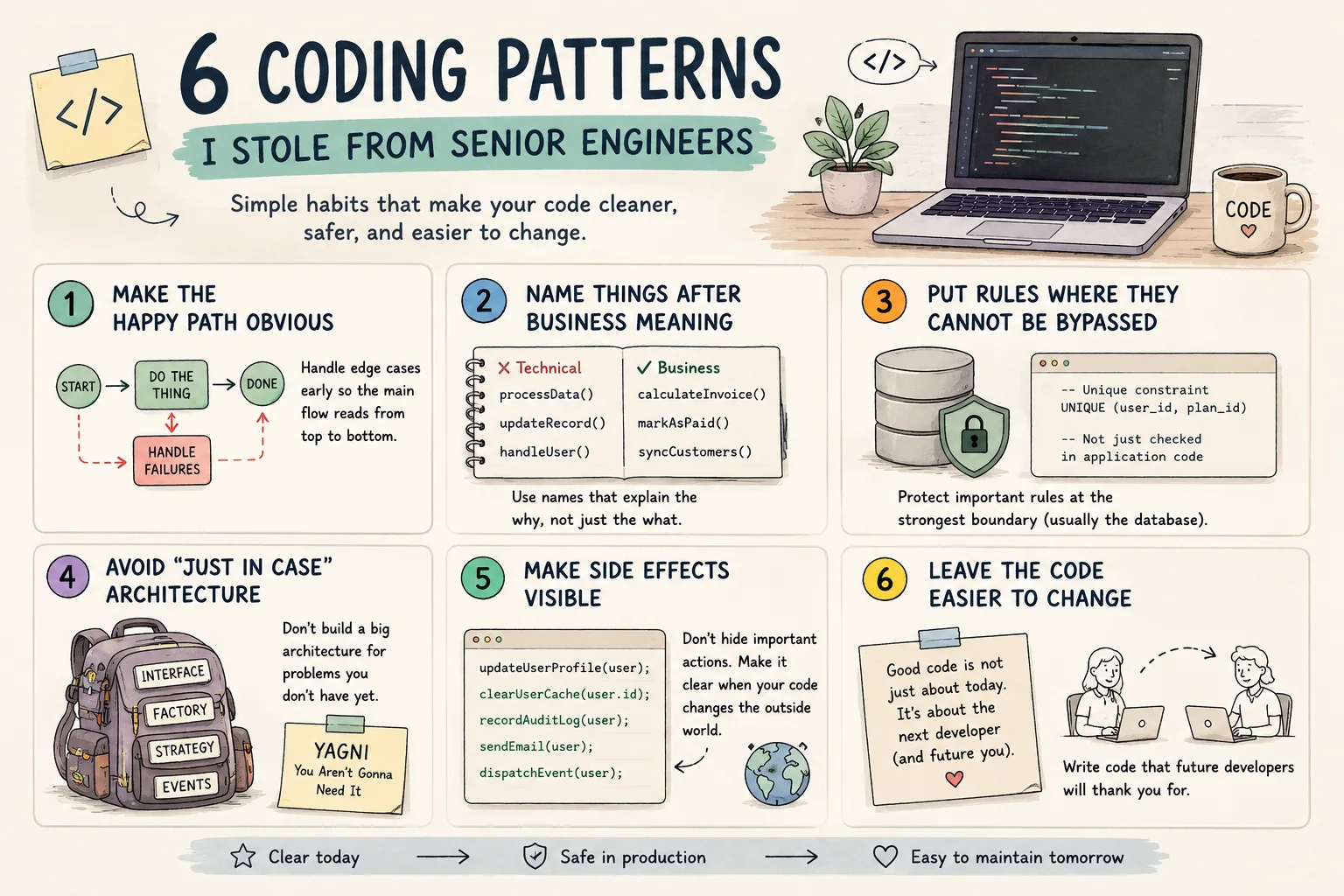
Senior Engineer’lardan Öğrendiğim 6 Kodlama Pattern’i

Özel Bir Yapay Zeka Not Asistanı Kurun
Markdown notlarını özel taslakları açığa çıkarmadan aranabilir bir asistana dönüştürün.
Yorumlar
0 yorumHenüz onaylı yorum yok. Yeni yanıtlar moderasyon bekleyebilir.