Green IT and Sustainable Technology
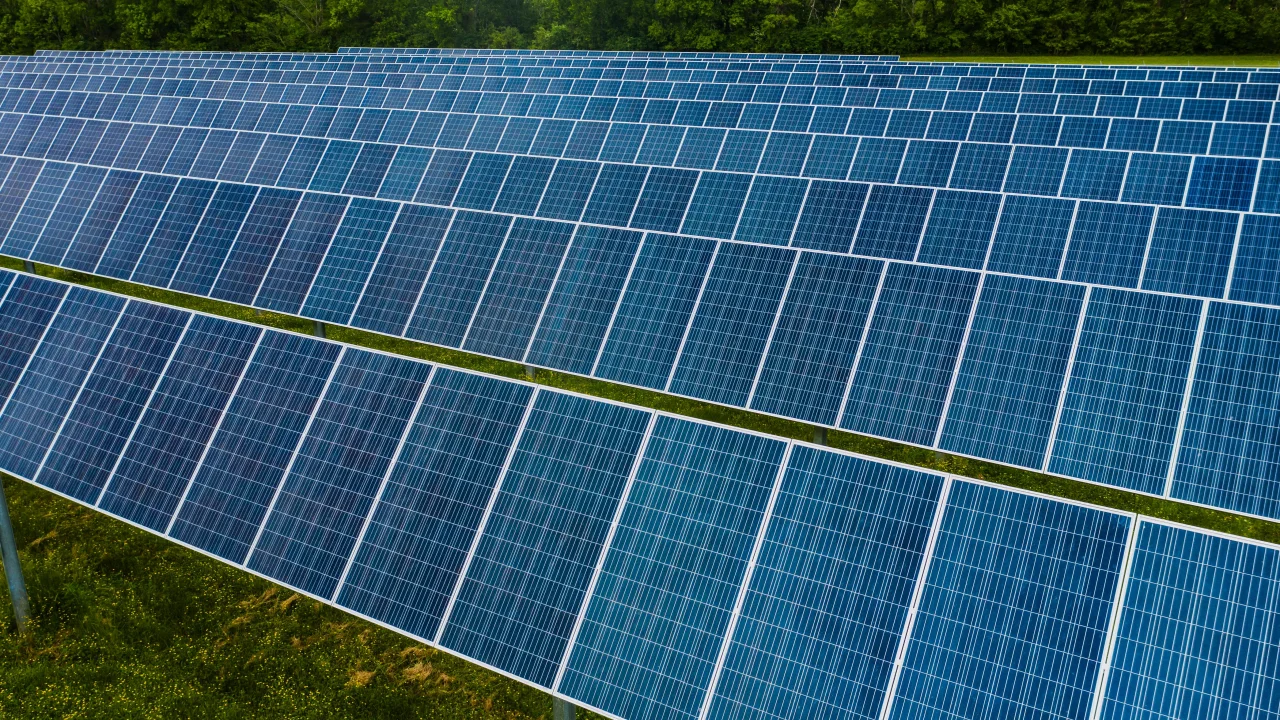
Green IT (Green Information Technology) encompasses the design, manufacture, use, and disposal of computer systems and IT infrastructure in an environmentally sustainable manner. As digital transformation accelerates, the environmental footprint of technology has become a critical concern for organizations worldwide.
Introduction
Green IT (Green Information Technology) encompasses the design, manufacture, use, and disposal of computer systems and IT infrastructure in an environmentally sustainable manner. As digital transformation accelerates, the environmental footprint of technology has become a critical concern for organizations worldwide.
IT accounts for approximately 2-4% of global carbon emissions — comparable to the aviation industry. Data centers consume about 1% of global electricity. E-waste is the fastest-growing waste stream globally, reaching over 60 million tons annually. For IT professionals, understanding and implementing sustainable practices is no longer optional — it is a professional responsibility and a business imperative.
The Environmental Impact of IT
Where Emissions Come From
IT Carbon Emissions Breakdown:
──────────────────────────────────
Data Centers:       45%  (cooling + compute)
End-user devices:   25%  (laptops, phones, monitors)
Networks:           20%  (routers, switches, cell towers)
Manufacturing:      10%  (hardware production)

Source: Greenpeace, IEA, Uptime Institute 2025
The Carbon Footprint of Common IT Activities
| Activity | CO₂ Equivalent | Comparable To |
|---|---|---|
| 1 hour video streaming | 36g CO₂ | Driving 200m |
| 1 AI training session (GPT-3) | 552 tons CO₂ | 123 homes' annual energy |
| 1 year of email (1 user) | 136 kg CO₂ | 500 km car travel |
| 1 Google search | 0.2g CO₂ | ~0.02% of a cheeseburger |
| 1 hour video conference | 150g-1kg CO₂ | 1-6 km car travel |
| 1 TB data stored in cloud (1 year) | 200 kg CO₂ | 1,000 km flight |
1. Energy-Efficient Data Centers
Data centers are the largest source of IT carbon emissions. Optimizing them yields the greatest impact.
Power Usage Effectiveness (PUE)
PUE is the most important metric for data center efficiency:
PUE = Total Facility Energy / IT Equipment Energy

Ideal PUE: 1.0 (all energy goes to IT)
Industry average: ~1.58
Best practice: <1.2
Leading hyperscalers: <1.1
PUE optimization strategies:
| Strategy | PUE Improvement | Implementation Cost |
|---|---|---|
| Hot/cold aisle containment | -0.15 to -0.25 | Medium |
| Variable speed fans | -0.10 to -0.20 | Low |
| Free air cooling | -0.20 to -0.40 | Medium |
| Liquid cooling (direct-to-chip) | -0.30 to -0.50 | High |
| Immersion cooling | -0.40 to -0.60 | High |
| AI-optimized cooling | -0.10 to -0.30 | Medium |
Cooling Technologies
Free air cooling: Use outside air when temperature and humidity permit:
cooling_strategy:
  - condition:
      outdoor_temp: "< 18°C"
    action: "100% free air cooling (chillers off)"
    energy_savings: "100% cooling energy"

  - condition:
      outdoor_temp: "18-25°C"
    action: "Air-side economizer + partial chiller"
    energy_savings: "60-80% cooling energy"

  - condition:
      outdoor_temp: "> 25°C"
    action: "Full mechanical cooling"
    energy_savings: "0% (baseline)"
Liquid cooling comparison:
| Type | How It Works | Energy Reduction | Water Usage |
|---|---|---|---|
| Air cooling | Fans blow air over servers | Baseline | None |
| Rear-door heat exchanger | Water-cooled doors on racks | 30-40% | Moderate |
| Direct-to-chip | Liquid cools CPU/GPU directly | 50-60% | Low (closed loop) |
| Immersion | Servers submerged in dielectric fluid | 80-95% | None (closed loop) |
Renewable Energy Procurement
| Strategy | Description | Cost Impact |
|---|---|---|
| PPA (Power Purchase Agreement) | Long-term contract to buy renewable energy | Lower long-term cost |
| RECs (Renewable Energy Certificates) | Purchase certificates offsetting consumption | Premium on standard rates |
| On-site generation | Solar panels, wind turbines on facility grounds | High upfront, low opex |
| Carbon offsets | Invest in carbon reduction projects externally | Variable |
Leading examples:
- Google — Carbon-free energy 24/7 by 2030 target (currently 64%).
- Microsoft — Carbon-negative by 2030. Internal carbon tax ($15/ton).
- AWS — 100% renewable energy goal by 2025. 90%+ achieved in 2024.
2. Sustainable Software Engineering
The Green Software Foundation Principles
- Carbon efficiency — Emit the least carbon possible.
- Energy efficiency — Use the least energy possible.
- Hardware efficiency — Use the least hardware possible.
- Carbon awareness — Do more when energy is clean, less when it is dirty.
- Measurement — You cannot improve what you do not measure.
Code Optimization for Energy
# Inefficient — high CPU usage
def process_data(data):
    result = []
    for i in range(len(data)):
        for j in range(len(data)):
            result.append(data[i] * data[j])
    return result

# Efficient — reduced computational complexity
def process_data_optimized(data):
    # Use list comprehension (faster in Python)
    # O(n²) to O(n) where possible
    return [x * y for x in data for y in data]
Energy-efficient coding practices:
| Practice | Energy Savings | Effort |
|---|---|---|
| Use efficient algorithms (O(n) vs O(n²)) | 50-90% | Medium |
| Cache frequently accessed data | 30-70% | Low |
| Lazy loading (only compute when needed) | 20-40% | Low |
| Use compiled languages for compute-heavy tasks | 30-60% | High |
| Reduce data serialization/deserialization | 15-30% | Medium |
| Use batch processing instead of real-time | 40-60% | Medium |
| Compress data in transit and storage | 20-50% | Low |
Carbon-Aware Computing
Run workloads when carbon intensity is lowest:
import requests
from datetime import datetime

def get_carbon_intensity(region: str) -> float:
    """Get current carbon intensity (gCO₂eq/kWh) for a region"""
    response = requests.get(
        f'https://api.carbonintensity.org.uk/regional/{region}',
        timeout=5
    )
    return response.json()['data'][0]['intensity']['forecast']

def schedule_batch_job(job_function, max_intensity: float = 200):
    """Only run job when carbon intensity is below threshold"""
    intensity = get_carbon_intensity('west-midlands')

    if intensity <= max_intensity:
        print(f"Intensity {intensity}g/kWh — running job now")
        return job_function()
    else:
        # Reschedule for cleaner energy period
        delay_hours = 4
        print(f"Intensity {intensity}g/kWh — rescheduling in {delay_hours}h")
        return schedule_job(job_function, delay=delay_hours)
Dark Mode Energy Savings
| Display Type | Energy Savings (dark vs. light) |
|---|---|
| OLED (most smartphones) | 30-60% at max brightness |
| AMOLED (higher-end phones) | 40-70% |
| LCD (most laptops) | 3-10% |
| CRT (obsolete) | 50-70% |
/* Prefer dark mode when system uses it */
@media (prefers-color-scheme: dark) {
  :root {
    --bg: #121212;
    --text: #e0e0e0;
    --primary: #90caf9;
  }
}
3. Green Cloud Computing
Cloud Carbon Measurement
# AWS Customer Carbon Footprint Tool
aws ce get-custom-metrics --region us-east-1

# Azure Emissions Impact Dashboard
# Available in Azure Portal under "Carbon Optimization"

# GCP Carbon Footprint
# BigQuery: carbon-footprint dataset
SELECT
  project_id,
  service.description,
  SUM(carbon_footprint_kg_co2e) AS total_carbon_kg
FROM `region-us.INFORMATION_SCHEMA.CARBON_FOOTPRINT`
WHERE usage_month = '2026-05'
GROUP BY 1, 2
ORDER BY 3 DESC
Cloud Optimization for Sustainability
| Practice | Description | Carbon Reduction |
|---|---|---|
| Rightsize instances | Match instance size to workload requirements | 30-50% |
| Use autoscaling | Scale to zero when not needed | 40-80% |
| Delete orphaned resources | Unused volumes, load balancers, IPs | 5-15% |
| Choose green regions | Regions powered by renewable energy | 50-90% |
| Use spot/preemptible | Leverage spare capacity for batch jobs | 100% (already running) |
| Serverless | No idle resources | 40-90% dependent on traffic |
| Graviton/ARM instances | More efficient processors | 20-30% |
# Find and delete unattached EBS volumes (wasted resources)
aws ec2 describe-volumes \
  --filters Name=status,Values=available \
  --query 'Volumes[*].[VolumeId,Size,State]' \
  --output table

# Delete unused resources
aws ec2 delete-volume --volume-id vol-xxxxx
Carbon-Aware Region Selection
| Cloud Provider | Greenest Regions | Carbon Intensity |
|---|---|---|
| AWS | eu-west-1 (Ireland), eu-south-1 (Milan), us-west-2 (Oregon) | 50-150 gCO₂/kWh |
| Azure | Sweden Central, Norway East, Switzerland North | 10-50 gCO₂/kWh |
| GCP | europe-west6 (Zurich), us-west1 (Oregon), belgium-central | 20-100 gCO₂/kWh |
4. Hardware Lifecycle Management
The Hardware Lifecycle
Procurement → Use → Maintenance → Reuse → Recycle
    │          │         │          │        │
    │          │         │          │        └─ Material recovery
    │          │         │          └─────────── Donation / resale
    │          │         └────────────────────── Upgrades
    │          └──────────────────────────────── Energy optimization
    └─────────────────────────────────────────── Energy Star certified
Procuring Sustainable Hardware
| Certification | Criteria | Applies To |
|---|---|---|
| Energy Star | Energy efficiency | All devices |
| EPEAT | Full lifecycle environmental impact | Electronics |
| TCO Certified | Social and environmental responsibility | IT products |
| 80 PLUS | Power supply efficiency | PSUs |
| Blue Angel | German ecolabel | Multiple categories |
Extending Hardware Lifespan
- Right to repair — Choose modular devices that can be repaired (Framework laptop model).
- Component upgrades — Upgrade RAM, storage, CPU instead of replacing entire machine.
- Refurbished equipment — Certified pre-owned devices reduce manufacturing emissions by 50-80%.
E-Waste Management
The e-waste hierarchy:
- Reduce — Buy only what you need.
- Reuse — Donate functional equipment to schools/nonprofits.
- Refurbish — Repair and resell.
- Recycle — Proper e-waste recycling for metals and plastics.
- Dispose — Last resort, ensure certified disposal.
e_waste_policy:
  - "All electronic waste must be processed by certified recyclers (R2/e-Stewards)"
  - "Data destruction required before disposal (DoD 5220.22-M standard)"
  - "Batteries must be removed and recycled separately"
  - "Track disposal with chain of custody documentation"
  - "Annual e-waste audit and reporting"
5. Measuring Carbon Footprint
The SCI (Software Carbon Intensity) Standard
Developed by the Green Software Foundation:
SCI = (E × I) + M per R

Where:
  E = Energy consumed by the software (kWh)
  I = Carbon intensity of the energy source (gCO₂eq/kWh)
  M = Embodied carbon of hardware (gCO₂eq)
  R = Functional unit (per user, per request, per hour)
def calculate_sci(
    energy_kwh: float,
    carbon_intensity: float,
    embodied_carbon: float,
    functional_unit: str,
    units: int
) -> float:
    """
    Calculate Software Carbon Intensity score

    Args:
        energy_kwh: Energy consumed in kWh
        carbon_intensity: gCO₂eq/kWh for the region
        embodied_carbon: gCO₂eq for hardware manufacturing
        functional_unit: e.g., 'per_user', 'per_request'
        units: Number of functional units

    Returns:
        SCI score in gCO₂eq per functional unit
    """
    operational = energy_kwh * carbon_intensity
    total = operational + embodied_carbon
    sci = total / units

    return sci

# Example: Web API serving 10K requests
sci = calculate_sci(
    energy_kwh=50,
    carbon_intensity=200,  # gCO₂/kWh
    embodied_carbon=100000,  # gCO₂ for server manufacturing
    functional_unit='per_1000_requests',
    units=10  # 10K / 1000
)
print(f"SCI: {sci:.2f} gCO₂eq per 1000 requests")
Cloud Carbon Footprint Tool
# Install Cloud Carbon Footprint (open-source)
npm install -g @cloud-carbon-footprint/cli

# Generate emissions report
ccf --aws --azure --gcp \
  --startDate 2026-01-01 \
  --endDate 2026-05-24 \
  --outputFormat json \
  --outputFile emissions-report.json
Green IT Best Practices Checklist
Immediate (No-Cost) Actions
- [ ] Enable power management on all devices (sleep after 15 min idle)
- [ ] Turn off monitors and equipment at night
- [ ] Remove unnecessary browser tabs and background apps
- [ ] Use dark mode on OLED/AMOLED displays
- [ ] Delete unused cloud resources (volumes, IPs, load balancers)
- [ ] Reduce email attachments (use links instead)
- [ ] Unsubscribe from unnecessary mailing lists
- [ ] Close unused applications and background processes
Short-Term (Low-Cost) Actions
- [ ] Implement autoscaling for cloud resources
- [ ] Rightsize over-provisioned instances
- [ ] Enable compression for data storage and transfer
- [ ] Implement caching to reduce computation
- [ ] Deploy monitoring for idle resources
- [ ] Upgrade to energy-efficient LED lighting in server rooms
- [ ] Implement hot/cold aisle containment in data centers
Long-Term (Investment) Actions
- [ ] Develop a green IT strategy with measurable targets
- [ ] Migrate to cloud regions powered by renewable energy
- [ ] Adopt liquid cooling or free air cooling in data centers
- [ ] Implement carbon-aware scheduling for batch workloads
- [ ] Transition to serverless/containerized architectures
- [ ] Establish an e-waste recycling program
- [ ] Purchase Energy Star/EPEAT certified equipment
- [ ] Consider carbon offsets for unavoidable emissions
- [ ] Report IT carbon emissions in annual ESG reports
Conclusion
Green IT is both an ethical responsibility and a business opportunity. Energy-efficient systems cost less to operate. Sustainable practices attract environmentally conscious customers and employees. Regulatory pressure (EU Green Deal, SEC climate disclosure rules) is making carbon reporting mandatory.
The Business Case
| Action | Cost Savings | Emission Reduction |
|---|---|---|
| Cloud rightsizing | 30-50% | 30-50% |
| Autoscaling | 40-80% | 40-80% |
| Server migration to ARM | 20-30% | 20-30% |
| Data center cooling optimization | 20-40% | 20-40% |
| E-waste recycling | Revenue from material recovery | 100% (vs. landfill) |
Get Started Today
- Measure — Calculate your current IT carbon footprint.
- Identify — Find the biggest sources of emissions in your stack.
- Optimize — Implement the highest-impact, lowest-effort changes first.
- Monitor — Track progress and report results.
- Repeat — Sustainability is a continuous improvement journey.
Every watt saved and every device recycled contributes to a more sustainable digital future.
Featured Articles
The 10 Largest Frontend Performance Challenges in 2026 (And How to Fix Them)

Should I Use React or Next.js? Complete Comparison Guide 2026

Build an Offline-First SaaS with Laravel & React: Complete PWA Tutorial 2026
Comments
0 commentsNo approved comments are visible yet. New community replies may wait for moderation.